moldybluecheesecurds 2

Friday, December 21, 2007

Grout sealer: recall didn't really work


If you're a DIY kind of person and have done tile recently, make sure you don't have any of this stuff. After being recalled, the company was slow to remove it from shelves and then sent a replacement product with the same dangerous chemical.

The story goes on to discuss the failure of oversight from the Consumer Products Safety Commission.

Can you be big and organic?

A lawsuit has been brought against Aurora Organic Dairy, the supplier of Target's house brand "organic" milk. A few years back, Aurora was in violation of many of the USDA's precepts of being organic (such as not providing cows with pasture time) with the USDA noting that its production methods actually look an awful like traditional factory dairy.

The lawsuit has raised hackles among consumers of organic food - who want to be able to believe the label - and industrial food producers who want to be able to ride the rising tide of organic food sales - 21% growth in 2006, in an otherwise stagnant industry. Aurora has responded to the lawsuit:
"The suit against Target is the latest in a series of copycat lawsuits inspired by the false claims of activist groups engaged in a smear campaign against large-scale organic producers," Aurora spokeswoman Sonja Tuitele said in an emailed statement. (emphasis mine)
The quote above highlights the issue. What if food labeled organic isn't what consumers think it is?
The small dairy farms counter that when consumers buy milk labeled "organic," they picture it coming from small herds of cows that graze lazily on bucolic pastures.
The USDA has defined organic, and the size of the establishment isn't part of the definition. But when a producer must "emphasize the use of renewable resources and the conservation of soil and water to enhance environmental quality for future generations," it's a little hard to think of that being large-scale.

Cosine

That was the subject line in my latest spam. Because nothing gets people to open email like trigonometry.

Thursday, December 20, 2007

Torture: immoral, and as it turns out, ineffective

A nice story on the best understanding of the effectiveness of torture. The interview is with an expert who deals with torture victims.
Harsh interrogation definitely yields names and other information, Johnson agreed. "It works," he said.

But the information confessed is utterly unreliable, he said, and it can lead investigators in the wrong direction, endangering U.S. military forces and threatening national security.

In a panic to stop tough interrogation, many will spit out any name that comes to mind — innocent neighbors, cousins and friends — Johnson said.
In other words, torture gets people to spill the beans. Whatever beans will get their torturer to stop... For an administration of yes men, I guess that's why torture works out well.

You can read more on the story at the above link or check out the full (pdf) report.

Wednesday, December 19, 2007

Sex Education: Some of our states IS learning

Not only are states wising up to the ineffectiveness of "abstinence-only" monologuing, they're actually turning down federal funds for it. Hooray for science!

Printer ink: don't go jumping off the bridge yet

It's probably obvious, but your inkjet printer can keep printing for a while after it tells you it has run out. How much depends on the brand, but as much as two-thirds of the ink might remain when the thing informs you it's empty.

I think those printers need an Office Space style beatdown.

Tuesday, December 18, 2007

The mortgage crisis was not a surprise

Federal officials were warned - multiple times - that exotic and subprime mortgages were contributing to a shaky and unsustainable housing market. Let's give a big hand for the free market.

Monday, December 17, 2007

Paper or plastic (or ceramic or steel)?

Pablo of AskPablo takes on the question of disposable v. reusable drink containers for coffee (or your beverage of choice). While the results aren't unexpected (for repeat use, reusable is more sustainable), some of the details are interesting:
At 46 uses, the ceramic mug becomes the environmentally responsible choice [over styrofoam]. And after 369 uses, the stainless steel mug also become a better choice than styrofoam.
That's right, it takes a year for that daily cup of joe in a stainless steel mug to even out with the disposable styrofoam, thanks to high resource and production costs. And then there's the paper cup, seemingly more environmentally benign:
24 paper cups are equivalent in material intensity to a stainless steel mug
Wow. 15 times more resource-intense than styrofoam. But as with most environmental choices, it's not even that black-and-white.
Additional dimensions include the recyclability of the materials, their toxicity, the biodiversity of the raw material extraction site, and the working conditions along the supply chain.
And one other thing: you save a lot less environment if you have many reusable mugs. After all, each stainless steel mug you own takes a year to beat a 1-a-day habit of styrofoam.

Friday, December 14, 2007

Locavore, grab your gun

An insightful op-ed piece in the NY Times today examines how hunting for game meat may be the ticket to being a green carnivore. He notes that all it would take is a little name change.
But, in keeping with the times, it might be better to relabel it as free-range, grass-fed, organic, locally produced, locally harvested, sustainable, native, low-stress, low-impact, humanely slaughtered meat.
There's something to it.

Wednesday, December 12, 2007

Welcome to the lexicon, w00t

Thanks to Merriam-Webster, w00t is the Word of the Year for 2007. What better way to express our gratitude to M-W than "w00t!"

Tuesday, December 11, 2007

The housing bubble reminds me of An Inconvenient Truth

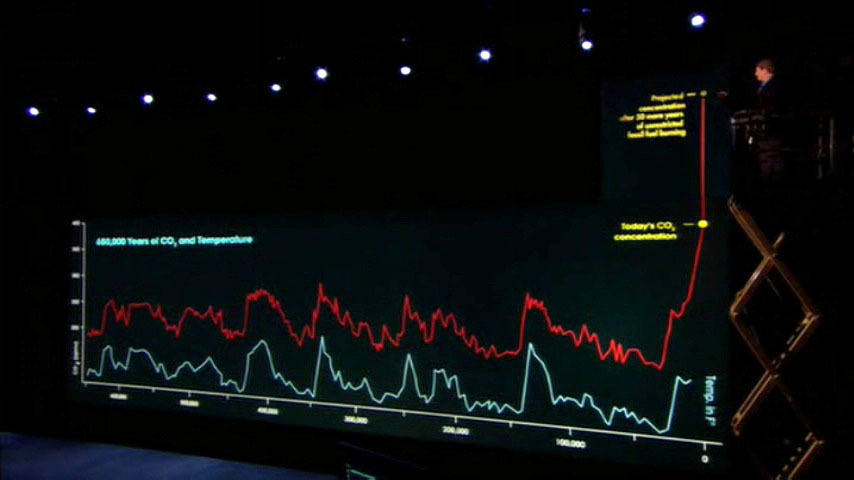
Basically, if housing prices get too high, people shouldn't be buying houses because renting will be cheaper. The linked chart shows the ratio of housing prices to rental prices, a measure of the imbalance in the residential market. The tail end we're on reminds me of the global carbon increase chart that Al Gore required a hydraulic lift to illustrate. This bubble hasn't begun to burst.

Do lobbyists muck up the American political system?

Factcheck.org looks at lobbying in the Constitutional context.

Monday, December 10, 2007

Bush is smart - he plays word games

President Bush may have been informed that Iran does not have an active nuclear weapons program, but that hasn't stopped him from insinuating one.

Friday, December 07, 2007

A police chief with respect for 1st Amendment rights

When the Republican National Convention comes to St. Paul, Minnesota, in 2008 it could recall any number of past conventions. What police and protesters look to avoid is a comparison to the disorder around the 1968 Chicago Democratic Convention or the stifling security around the 2004 Conventions in Boston and New York.

The top cop responsible for St. Paul's security for the 2008 Republican convention is taking steps to build relationships with protesters, to more evenly balance security and free speech.
There will be no police officers infiltrating protest organizations, Bostrom promised. Police will be in uniform, not war-like tactical gear, he said. There will be no contract cops, similar to the Blackwater security forces. St. Paul police, not the Secret Service, will be in charge of policing outside the convention site at Xcel Energy Center.
It's a great start. Let's hope the yahoos don't mess up this excellent attempt at providing a free speech zone inside and outside the convention center.

Why Calling Dick Cheney Darth Vader is Too Generous

1) Darth Vader served in the military
2) Darth Vader's contractors actually finished their job (i.e. the Death Star)

Nod to Paul Krugman for the hilarious, and honestly very sad, comparison.

Thursday, December 06, 2007

Climate change policy: cap and trade flopped in Europe

The U.S. is getting much closer to regulating carbon emissions to combat global warming, but the most likely policy is a carbon cap and trade system. Problem is, Europe tried such a system starting three years ago and this interview discusses how that program has flopped.

This is why a cap-and-rebate may be a much better option.

Tip of the hat to Triple Pundit for the story.

Bureaucracy at work

When I was job hunting, I applied for jobs in the nonprofit and government sector. I was lucky to find a great job that I started in October 2006. So how is it possible that, over a year later, I'm still getting these emails?
Dear XXXX

Thank you for applying for the XXXXX Department of...Economic Development Planner Senior State position, 07DEED000233.

We have decided to select a candidate from within the Department.
Does it really take that long to hire someone in a state agency? Ugh.

Wednesday, December 05, 2007

The mortgage crisis: illustrated version

Trying to understand how a bunch of "subprime" loans caused a mortgage crisis? This animated mortgage crisis illustration might explain. Basically, banks sold mortgages as "securities" (think mutual funds) to other investors but dramatically underestimated the risk of widespread defaults (foreclosures).

In other words, when those crazy adjustable-rate mortgages started bankrupting people all over the country at once, the flow of cash dried up. And that meant that those securities (stocks) dropped precipitously in value. Oops.

Tuesday, December 04, 2007

No nukes in Iran

In case you were being whisked away on President Bush's (In)credibility Express (next stop: Iran), check this out. The report from the combined intelligence agencies of the United States - the Intelligence Estimate - says that the 2005 report was in error and that Iran does not have an active nuclear weapons program.

No nukes, no troops.