Showing posts with label climate change. Show all posts
Showing posts with label climate change. Show all posts
Thursday, February 18, 2010

Monday, May 11, 2009
Two week wrap
A few interesting news items this past two weeks:
- Became a dad - welcome BAF!
- Rep. Michele Bachmann continues to lie when it suits her, discussing swine flu or the budget reconciliation process in Congress.
- Friedman thinks it's a decent compromise to out those who tortured but not push for prosecutions, but Krugman says it's nothing short of keeping our legal and moral standards to fully prosecute.
- Opponents to climate change legislation tend to think markets are best to solve everything, except carbon emissions (too costly!). Gotta love the smell of cognitive dissonance in the morning.
- We may have moved beyond "she asked for it" in our perceptions of rape, but the U.S. shows poor attention to justice when it leaves "rape kits" untested for years.
- A nice chart on income concentration in the U.S. shows that we're (hopefully) coming off the peak of another Gilded Age (Roaring Twenties). Both this period and the prior one were highlighted by spectacular financial speculation and shenanigans.
Tuesday, March 24, 2009
Crying wolf in climate change
Climate Progress had an interesting post last week asking why climate deniers always shout down any link between extreme weather and climate change.
I have a better question: what's the danger in having climate change activists link every weather phenomenon to climate change?
Climate is not equal to weather (for the distinction, click here), but when we blame a given weather event or even a season of them on climate change, we make fools of ourselves the next time the weather reverts to the norm.
Climate change is a long-range phenomenon, seen over decades, and we trivialize it by associating it with weather.
I have a better question: what's the danger in having climate change activists link every weather phenomenon to climate change?
Climate is not equal to weather (for the distinction, click here), but when we blame a given weather event or even a season of them on climate change, we make fools of ourselves the next time the weather reverts to the norm.
Climate change is a long-range phenomenon, seen over decades, and we trivialize it by associating it with weather.
Monday, February 16, 2009
In case you've heard of global cooling
There are some nutters out there who not only want to deny global warming, but claim that there was some sort of scientific consensus on the subject back in the 1970s.
If you've heard of global cooling or particularly that claim, you need to read why global cooling is a farce, and there's a scientific consensus on global warming.
If you've heard of global cooling or particularly that claim, you need to read why global cooling is a farce, and there's a scientific consensus on global warming.
Thursday, July 10, 2008
China's carbon emissions: how much are ours?
One of the big hangups in a global climate agreement has been the interest of the United States in holding developing economies accountable for their climate emissions. But there's one big problem - a lot of the carbon emissions in China and India serve their export businesses, ones that U.S. firms often set up to obtain cheap labor and more relaxed environmental standards.
In other words, we own a great deal of China's carbon emissions, because they serve U.S. consumption. In fact, at least 23% of China's emissions are from exports to industrialized countries.
I think our share is a bit bigger than we've admitted.
In other words, we own a great deal of China's carbon emissions, because they serve U.S. consumption. In fact, at least 23% of China's emissions are from exports to industrialized countries.
I think our share is a bit bigger than we've admitted.
Wednesday, June 18, 2008
Good energy policy: efficiency pays back 2 to 1
From wind power to biofuels, there's a lot of time and money spent on replacing our carbon-emitting fossil fuel power sources with renewable and green ones. But the cheapest and most effective way to save the planet (and money) is energy efficiency. And a new study finds that for every dollar states spent on energy efficiency in the past 15 years, it paid back two.
Support energy efficiency standards, it may be the easiest way to save the planet.
Support energy efficiency standards, it may be the easiest way to save the planet.
Friday, December 21, 2007
This energy bill overlooks climate change
While the provisions excised (15% renewable electricity mandate) promised to make a real dent in carbon emissions, the two biggest remaining provisions in the federal energy bill won't help much at all.
In fact, the highly touted fuel economy increases may actually increased carbon emissions. Over at TriplePundit, they explore how efficiency improvements tend to lead to increased consumption (via population and economic growth). And increased fuel consumption means more CO2.
Brilliant.
In fact, the highly touted fuel economy increases may actually increased carbon emissions. Over at TriplePundit, they explore how efficiency improvements tend to lead to increased consumption (via population and economic growth). And increased fuel consumption means more CO2.
Brilliant.
Tuesday, December 11, 2007
The housing bubble reminds me of An Inconvenient Truth
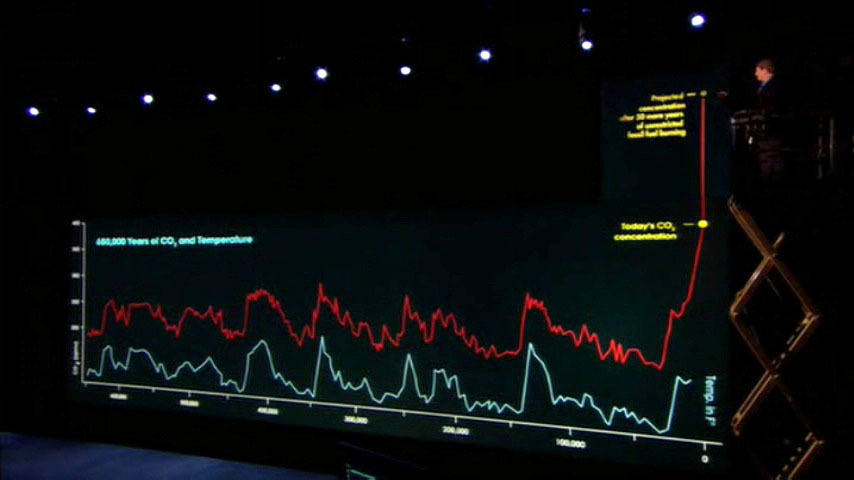
Basically, if housing prices get too high, people shouldn't be buying houses because renting will be cheaper. The linked chart shows the ratio of housing prices to rental prices, a measure of the imbalance in the residential market. The tail end we're on reminds me of the global carbon increase chart that Al Gore required a hydraulic lift to illustrate. This bubble hasn't begun to burst.
Thursday, December 06, 2007
Climate change policy: cap and trade flopped in Europe
The U.S. is getting much closer to regulating carbon emissions to combat global warming, but the most likely policy is a carbon cap and trade system. Problem is, Europe tried such a system starting three years ago and this interview discusses how that program has flopped.
This is why a cap-and-rebate may be a much better option.
Tip of the hat to Triple Pundit for the story.
This is why a cap-and-rebate may be a much better option.
Tip of the hat to Triple Pundit for the story.
Thursday, November 15, 2007
Monday, November 12, 2007
Which presidential candidate cares the most about the environment?
Find out their positions on carbon caps, fuel efficiency standards, renewable electricity and new coal power from the League of Conservation Voters.
You'll note there's a large gap between the Democratic and Republican candidates, with the exception of Senator McCain.
You'll note there's a large gap between the Democratic and Republican candidates, with the exception of Senator McCain.
Tuesday, October 23, 2007
Global warming: think thirsty
One of the excellent, in-depth stories from the NY Times examines an often overlooked consequence of global warming and population growth - decreasing water availability.
When Binney and I met at Dillon Reservoir, he brought graphs of Colorado River flows that go back nearly a thousand years. “There was this one in the 1150s,” he said, tracing a jagged line downward with his finger. “They think that’s when the Anasazi Indians were forced out. We see drought cycles here that can go up to 60 years of below-average precipitation.”For the 30 million people that depend on the Colorado River, that's no laughing matter. The story goes on to discuss how water use in the United States is decreasing, but not nearly fast enough to prepare for inevitable battles between states and regions for the precious resource.
Friday, October 19, 2007
That's the point
In response to the climate change bill introduced in the U.S. Senate, proposing greenhouse gas reductions of 65% from 2005 levels by 2050, the CEO of the American Chemistry Council had this to say:
The bill would "turn energy markets upside down, causing massive reductions in coal usage and enormous increases in natural gas and renewable fuels usage."Yes.
Friday, July 06, 2007
That CO2 spewing machine: the bicycle
I'd try to explain, but you have to see the video to believe it. Here's a creationists take on the "global warming" issue:
Kudos to CM for the note about this, and to onegoodmove for the coverage (and excellent URL). Oh, and in case you really need some facts to know he's a nutjob, look no further.
Kudos to CM for the note about this, and to onegoodmove for the coverage (and excellent URL). Oh, and in case you really need some facts to know he's a nutjob, look no further.
Thursday, June 28, 2007
Thursday, June 14, 2007
Comments on CAFE standard
Thanks to the two folks who wrote in about the CAFE standards. Both had interesting perspectives I'd like to share.
E noted that carbon demand (fossil fuel use) is very inelastic (doesn't change easily despite price fluctuations) and that a carbon cap operates like a quota. In other words, it will drive prices up almost immediately.
To Otto: I appreciate your support for lower CAFE standards on the basis of allowing Americans to continue to indulge their desire for large SUVs and light trucks. But I'm not only disagreeing that it's environmentally feasible to cop out on CAFE, but arguing that CAFE standards fall completely short in the long run, as fuel economy increases simply reduce demand and lower prices for fossil fuels.
To E: I'm not sure exactly how to deal with the externalities of a carbon cap, and I agree they may not be desirable. The problem is that a carbon cap/tax/etc is improving the market by internalizing the cost of carbon emission. So while government might need to help level the inequity of a carbon tax (for low income, perhaps family farmers), there's no option for stopping global warming other than lowering carbon emissions and we can't do that by farming/driving/or burning diesel fuel at the rate we've been doing it.
The good news is that stabilizing climate change at 2 degrees Celsius can be done primarily with efficiency improvements, costing less than $52/ton of carbon. This poster illustrates another way to look at it: holding carbon emissions to twice pre-industrial levels (pdf). The 15 "wedges" of 1 gigaton discussed are all eminently do-able, and only 7 are needed.
E noted that carbon demand (fossil fuel use) is very inelastic (doesn't change easily despite price fluctuations) and that a carbon cap operates like a quota. In other words, it will drive prices up almost immediately.
I'm confident that my family's farming business would end very quickly, as diesel fuel is -needed- for it to function, and our profit margins are slim to begin with.Otto also shared his perspective on CAFE, although it was more to promote his support for weaker CAFE standards than anything else. From the Auto Alliance, he supports Pryor-Bond-Levin, which would scale back the fuel economy increases in the current legislation.
To Otto: I appreciate your support for lower CAFE standards on the basis of allowing Americans to continue to indulge their desire for large SUVs and light trucks. But I'm not only disagreeing that it's environmentally feasible to cop out on CAFE, but arguing that CAFE standards fall completely short in the long run, as fuel economy increases simply reduce demand and lower prices for fossil fuels.
To E: I'm not sure exactly how to deal with the externalities of a carbon cap, and I agree they may not be desirable. The problem is that a carbon cap/tax/etc is improving the market by internalizing the cost of carbon emission. So while government might need to help level the inequity of a carbon tax (for low income, perhaps family farmers), there's no option for stopping global warming other than lowering carbon emissions and we can't do that by farming/driving/or burning diesel fuel at the rate we've been doing it.
The good news is that stabilizing climate change at 2 degrees Celsius can be done primarily with efficiency improvements, costing less than $52/ton of carbon. This poster illustrates another way to look at it: holding carbon emissions to twice pre-industrial levels (pdf). The 15 "wedges" of 1 gigaton discussed are all eminently do-able, and only 7 are needed.
Are CAFE standards the right path?
A post by my favorite oil-and-gas-price analyst Robert Rapier got me thinking about CAFE standards amidst the challenges of oil dependency, carbon emissions, and energy security. He's a skeptic of CAFE not because he opposes fuel efficiency, but because it shifts responsibility:
The last time CAFE standards were increased dramatically, average vehicle weight shrank by 1000 pounds (almost 25%) in five years as cars dumped steel, used lighter components, and shrank in size. This time around, the heavy cars still use lighter components, they're just big. In other words, cars will likely get smaller. The car companies know this, so they've started a big ad campaign against CAFE standards (and a plug for hydrogen technology which will a) never happen and b) is pointless because it uses fossil fuels).
The problem is, we're in a lose-lose. CAFE standards themselves will help, but they are a halfway solution because increases in fuel economy decrease fuel demand and lower prices (which then has the opposite effect). Without CAFE standards, however, we're not likely to make a significant dent in carbon emissions.
Other solutions?
That's a great idea.
Note: I didn't address carbon "cap and trade" in my solutions. Here's why.
The problem I see is that this attempts to address the issue in the same way that windfall profits' proposals attempt to address the issue of high gas prices. There are plenty of high fuel efficiency cars on the market now. The problem is, people aren't demanding them. They want their SUVs and big trucks. What people are really after here is a free lunch. They think increasing CAFE standards will make everyone else drive a fuel-efficient vehicle...Increasing CAFE standards is not going to increase the public's desire to drive fuel efficient cars, nor is it going to result in a 35 mpg Ford Expedition. (emphasis original)Solving oil dependency, global warming, et al, requires that we act to use fuel more efficiently. While a fuel mandate does work (fuel efficiency doubled from 1978 to 1985), it worked in the context of supply shortages and high prices. In other words, though the standard worked, it got its political strength from a high price environment (and a time when fewer people drove SUVs).
The last time CAFE standards were increased dramatically, average vehicle weight shrank by 1000 pounds (almost 25%) in five years as cars dumped steel, used lighter components, and shrank in size. This time around, the heavy cars still use lighter components, they're just big. In other words, cars will likely get smaller. The car companies know this, so they've started a big ad campaign against CAFE standards (and a plug for hydrogen technology which will a) never happen and b) is pointless because it uses fossil fuels).
The problem is, we're in a lose-lose. CAFE standards themselves will help, but they are a halfway solution because increases in fuel economy decrease fuel demand and lower prices (which then has the opposite effect). Without CAFE standards, however, we're not likely to make a significant dent in carbon emissions.
Other solutions?
- Gas tax increase - price up, demand down. People can see right on the car sticker (XX mpg) how much this car will cost them and the additional revenue can be used to give income tax rebates to low-income folks. Disadvantages - doesn't deal with carbon emissions from other sources; Americans are surprisingly willing to adjust to higher prices.
- Carbon tax - price up, demand down. This would catch all the carbon emissions (on-road and off-road) and provide revenue for income tax rebates to the poor, but it still runs the risk of allowing people to buy their way into higher emissions. Americans have a lot of money - they'll probably give up the third TV, second home, and eating out before the give up driving solo to work.
- Moving carbon cap with auctioned carbon credits - price up, demand down, supply constrained. Lowers carbon emissions by fiat, but allows the market to allocate carbon to the highest bidder. Provides revenue to offset impact on the poor, invest in new technology, and provide alternative transportation. And best of all, it guarantees that carbon emissions will actually decrease.
That's a great idea.
Note: I didn't address carbon "cap and trade" in my solutions. Here's why.
Monday, June 04, 2007
Bush's climate hypocrisy
Let's examine this turn of events:
Update 3:58: I'd hate for you to miss this tidbit. Amidst Bush's new commitment to climate change, a policy of reducing efforts to measure global warming from space. Doubt the science, just stop collecting evidence!
- In 2001, the President was entirely skeptical about the human role in climate change: "we do not know how much effect natural fluctuations in climate may have had on warming. We do not know how much our climate could, or will change in the future. We do not know how fast change will occur, or even how some of our actions could impact it."
- As late as last week, the President continued to resist any action to mitigate global warming. The headline: U.S. rejects all proposals on climate change. In a draft document for the upcoming G8 summit, the attached note suggests that the United States is "fundamentally opposed" to all of Germany's proposed carbon mitigation steps. "Germany had stated in its draft that it wanted agreement to curb the rise in average temperatures this century to 2C and raise energy efficiency in power and transport by 20% by 2020."
- Then, this week, Bush supports negotiations among the top 15 greenhouse gas emitters to reduce carbon emissions. "By the end of 2008, he said, the countries would forge national plans for slowing emissions from 2012 through 2030 or so, devise uniform methods for measuring progress, increase research and testing of nonpolluting energy options, and settle on a common, but nonbinding, target for eventual large reductions in emissions decades out."
Update 3:58: I'd hate for you to miss this tidbit. Amidst Bush's new commitment to climate change, a policy of reducing efforts to measure global warming from space. Doubt the science, just stop collecting evidence!
Buy off your carbon sins
This Tanzanian traveler has a firsthand account of why carbon offsets are not the best idea:
Word around town is that a nearby village got a contract for carbon offsets! They got a bunch of money and devices to plant 10,000 trees. No trees were planted. The money disappeared into the pockets of the corrupt and they told the foreigners that all the trees were planted and showed them trees that were already there.This is why carbon offsets are like Catholic indulgences. Paying someone else to redeem your sins and clear your conscience is a feel-good manuver. Reducing carbon emissions is what really matters.
Thursday, May 31, 2007
Solving global warming: Give up on cap and trade
Courtesy of Energy Roundup, a new study examines the drawbacks of a cap-and-trade system (pdf) for reducing carbon emissions. Among the pitfalls:
Taxing carbon means that all sources of carbon in the economy are targeted. Carbon emission is directly linked to higher economic cost. And the revenue from carbon taxes can be used to offer low-income tax credits, revolving loans for energy efficiency improvements, and research into more energy efficiency and low-carbon energy generation. Furthermore, carbon taxes cut out the middleman of a carbon credit trading system or a carbon offset retailer. You emit, you pay. And best of all, the tax can be applied high up the food chain by slapping the carbon tax on fossil fuels based on their carbon content. So no individual will be filing a 1040-Carbon to the IRS at year's end.
- It targets large, stationary sources of carbon only, such as power plants. This accounts for less than half of U.S. carbon emissions.
- It traditionally takes up to 10 years for rule-making to establish such a regulatory system. And that's without an administration that has claimed it's not allowed to regulate carbon.
Taxing carbon means that all sources of carbon in the economy are targeted. Carbon emission is directly linked to higher economic cost. And the revenue from carbon taxes can be used to offer low-income tax credits, revolving loans for energy efficiency improvements, and research into more energy efficiency and low-carbon energy generation. Furthermore, carbon taxes cut out the middleman of a carbon credit trading system or a carbon offset retailer. You emit, you pay. And best of all, the tax can be applied high up the food chain by slapping the carbon tax on fossil fuels based on their carbon content. So no individual will be filing a 1040-Carbon to the IRS at year's end.
Subscribe to:
Comments (Atom)