Recently I joined Shelfari, a social networking/book club thing, because I clearly was not wasting enough time blogging or surfing the web. At any rate, it has helped me remember the books I promised myself to read and I've decided to write reviews of the nonfiction I read to both share something of my interests with y'all and to help me remember what I've read.
So here's the latest: The Progress Paradox by Gregg Easterbrook. It's a part of my "read the books you get as gifts" program - this one's from Dad.
I'd call the book 1/3 excellent and 2/3 overdone. The first third of the book focuses on the litany of ways the Western world has improved: environment, health, longevity. More people than ever have sufficient food, shelter, and material goods. Things are better than they ever have been, says Easterbrook. That this litany takes so long is probably the point, but by page 20 I was pretty done with hearing how great life is. I believe it, but that's not the "paradox," so let's get to it, eh?
The paradox is that despite all this material progress, happiness in Western countries hit a plateau in the 1950s. In fact, while portion of people saying they are happy has leveled off, the number reporting being "very happy" has declined and the number of depressed has increased. Why, amidst all this abundance, would that be?
Easterbrook initially fingers a number of social pressures. The news has a penchant for the negative, highlighting what's wrong instead of what's right. People seem configured to complain, to find the pieces of their life that are going wrong instead of right. Commercials help cram people into the role of victims. He even wonders if complaint was perhaps an evolutionary tactic to encourage people to continue to pursue progress.
But these are universal social pressures and wouldn't explain some of the deviations. For example, the disabled and chronically ill generally report being happier than the population at large. Happiness generally increases with age. And while lacking money makes a person unhappy, having it does not make someone happy.
And this is where The Progress Paradox gets interesting. Easterbrook examines some of the psychology behind our life of abundance and wonders if we have "woken up from the American Dream." In other words, we've achieved the material objectives of the Dream, and no longer have something to look forward to. Material wants and needs are met, so there's nothing to aspire to. He offers a tantalizing illustration: most people would be happier with an income of $50,000 that would increase by $5000 a year than with a flat annual income of $250,000. Happiness is a sense of progress, not achievement.
He also examines two components of modern Western life that may exacerbate any sense of unhappiness: privacy and freedom. He notes that for people living in crowded space, falling over family members and villagers, the private space accorded the typical Westerner would seem wonderful. Houses with twice as many rooms as occupants! On the other hand, this privacy and space leaves us with less context for our personal failings - who do we rely on when we fail? How do we see the big picture of the community when we are isolated from it?
The freedom accorded to individuals may also affect happiness. When we fail or are rejected, we can't explain it to ourselves as a class bias or caste system. Instead, rejection is much more personal. Easterbrook says this is particularly hard for women, for whom roles were much more prescribed in earlier days.
The one piece Easterbrook dismisses is the idea that we are more stressed. He notes that the subsistence farmer of the 19th century had his and his entire family's livelihood on the line with each season and that the idea we are more stressed is laughable. But he concedes that we are given more to stress about thanks to 24-hour disaster coverage from the news. Furthermore, our chronic sleep shortage (2-3 hours less per night than our forbears) causes a buildup of more stress-related chemicals. The human brain is also remarkably efficient at creating mental pathways for stress and fear, and the constant repetition of fears via the media can make us more fearful of minimal threats.
The solution, according to Easterbrook, is pretty much "doing good." First, he notes that feeling good about the world is completely natural. Darwin, for example, thought that emotional states were also evolutionary and that good emotions (such as cooperation and love) served an evolutionary purpose. Although the feelings may be innate, Easterbrook notes that they take work - you have to train yourself to think positively. But it works. "Quadriplegics, as a group, have a higher sense of well-being than lottery winners." It probably wasn't innate.
There's also a selfish reason to do good - it makes you happier. "Men and women should forgive most of the wrongs and offenses they experience in life...for the self-interested reason that people who let go of their grievances are better off as a result."
Easterbrook should have ended the book there, but I think he felt obligated to note that there are many challenges in the world and that they are solvable. So you end up being dragged away from his main premise into "here's how we might save the world" chapter before you finally hit the endnotes. But I think the take-away is still worth the read: do well unto others because it will do well unto you.
Thursday, February 07, 2008

Wednesday, February 06, 2008
Every holiday is shopping holiday
I got an email newsletter from a tech company the other day about early Easter shopping for gifts. And this Lifehacker column asks about Valentine's gifts for geeks.
I'm sorry, but do we have any holidays where we do something other than shop?
I'm sorry, but do we have any holidays where we do something other than shop?
How to lie with numbers, from the WSJ
Tip to Paul Krugman for this funny and yet not funny illustration of how you can lie with numbers.
The WSJ chart on defense spending (note the title):

And here's Krugman's correction:

The WSJ chart on defense spending (note the title):

And here's Krugman's correction:

My Obama spin
I'm for Obama and it was a great night for him on Super Duper Tuesday. He overcame all the polls of the past couple weeks and is now effectively neck and neck with Hillary. The only disappointment of the night was California, where Hillary maintained a fairly solid lead with 90% reporting (52-42%) this morning.
But here's a couple things to think about from the California exit polls:
But here's a couple things to think about from the California exit polls:
- Many Californians voted early via absentee ballot. Of those who decided their vote in the last three days, it was Clinton by 49-46%. Of those who decided earlier, it was Clinton 56-39%. In other words, Obama was surging, but many people may have already voted.
- Racism still has a grip. Of those who said race of the candidate was important, 62% went for Clinton. Of those who didn't, only 51% did.
Monday, February 04, 2008
Obama's health care plan (and rhetoric) needs a tweak
Paul Krugman has taken Obama to task several times in recent weeks for holes in his health care plan. For some of the campaign rhetoric from the Obama camp, check out Factcheck.org's recent post on an Obama health care mailer.
Krugman's criticism is tough love, since it addresses a couple shortcomings in the Obama plan: the issue of free riding and enforcement. Basically, if healthy people opt to not have insurance until they get sick, they get a "free ride." To make health care more economical, you make them sign up. Which takes enforcement. Obama's been criticizing Hillary for having an enforcement provision, but you really can't go universal without it.
Unless...you go with my idea. Which is that people are automatically signed up for health insurance on the government employee's plan unless they opt out. And you can only opt out if you have other health care coverage. You can opt for a monthly premium payment or just pay it from your taxes. In other words, leave the enforcement to people who already do it (the IRS) and the health care to an existing health care group (government employees).
And Obama, get your wonks and rhetoric around free riders and enforcement. Because we can't solve the health care problem without addressing both.
Disclosure: I'm supporting Obama on Super Tuesday.
From Edwards to who: two female Democrats pick their second choice
The story introduces the conversation as two John Edwards supporters looking for their second choice, but it's a powerful essay on why Barack Obama should be the Democratic nominee and our next president.
Tuesday, January 29, 2008
Book review: Deep Economy
I recently finished reading Deep Economy by Bill McKibben and it was an excellent book. The overall theme is that Americans have come to be obsessed with more. More economic growth, more material goods, bigger! better! McKibben begins his analysis by noting that for most Americans, wealth and material goods are not related to happiness and that we need to refocus on a "deeper" economy.
First, the main point. McKibben notes that once a country's per capita income exceeds $10,000, there is not a commensurate increase in the happiness of the population. Once basic needs of food and shelter are met, little happiness (if any) is gained from additional wealth. Economists call this the diminishing marginal utility of income (pdf).
One of the other main issues McKibben addresses is the issue of agriculture, health and the environment. Modern food systems generally involve large monocultures (a single plant covering thousands of acres), massive processing and packaging, and long-distance shipping. Thus every visit to the supermarket can offer local vegetables or exotic fruits, in any season. And it also serves up a healthy dose of pesticides, herbicides, and a massive carbon footprint.
McKibben notes that both our health (in terms of nutrition) and our land's productivity suffer. First, health suffers because when modern agriculture comes to the developing world, it tends to displace sufficiency farming. The former involves large monocropping of corns or soybeans or other commodities for export, the latter a mix of vegetables and grains to serve local nutritional needs. Modern agriculture actually reduces the self-sufficiency of the developing world and increases malnutrition.
Modern science has helped combat this with discoveries such as golden rice (infused with vitamin A) that replaces the vitamin A lost when other vegetables are not longer planted alongside rice. It's ironic, though, that it is really just a fix to another solution of modern times, the green revolution.
Even more intriguing, organic small-scale farming is actually more productive per acre and per unit of energy. That's right, you get more food for your land and inputs farming in a more traditional style, where corn can be planted in the same field as beans, instead of lined up for mechanical harvesting. And that is the tradeoff, of course. This more natural style of farming is labor-intensive and more expensive in dollars per pound of food, but more productive per acre of land.
The other big issue McKibben addresses as part of his exploration of happiness is community. Americans have a society committed to maximizing individual time: houses with more bedrooms than people, cable TV instead of movie theaters, cars instead of mass transit. The tradeoff is that people feel more alone and depressed than their parents.
McKibben suggests that community is a balancing act. Too much feels repressive, like having your parents or neighbors constantly at your door or in your space. To little leaves people vulnerable to anxiety and other products of social isolation.
Overall, I thought his book an interesting look at how to re-envision the modern economy to better respect the environment and the sense of human community. Highly recommended.
Monday, January 28, 2008
Would you envy this economy?
An article in today's New York Times suggests that the economy under President Bush would be the envy of many past presidents.
Dean Baker says, "I doubt it," defending his statement with a table of average annual GDP growth for presidential terms in the past 50 years.
Dean Baker says, "I doubt it," defending his statement with a table of average annual GDP growth for presidential terms in the past 50 years.
Kennedy-Johnson -- 5.2%Only Bush's father would envy this economy. And because I'm a partisan, I'd like to note that 3 of the top 4 are Democratic presidential regimes. None of the bottom three are. If it's the economy, stupid, then don't vote Republican.
Clinton -- 3.6%
Reagan -- 3.4%
Carter -- 3.4%
Nixon-Ford -- 2.7%
Bush II --2.6%
Bush I --1.9%
Sunday, January 27, 2008
The next president: Newt says start with a foreign listening tour
Tip to shadoweyes for the story in Foreign Policy referenc Newt Gingrich, former leader of the Republican Contract for America and now political statesman. The former Speaker has a good thought on the first job of the next president:
As soon as the new president is elected, he or she should immediately embark on a series of pre-inauguration visits to capitals around the world: not just London, Paris, and Jerusalem, but Ankara, Amman, Beijing, and Cairo. In the span of several weeks, the president should make dozens of stops in Latin America, the Middle East, Europe, Africa, and Asia. During these visits, not one moment needs to be spent trying to prove or demonstrate American power and dominance. Instead, the president-elect should simply listen. There should be no formal agenda, only questions. How do these other leaders think the United States can be most effective with its economic, military, and cultural might? And in turn, how do they propose to help achieve mutual goals during the next four years?I was never much for Newt's domestic policy, but that's some very intelligent ideas about helping build American soft power and diffusing some of the sources of foreign terrorism.
Friday, January 25, 2008
For the record: Obama's 2002 anti-war statement
"I also know that Saddam poses no imminent and direct threat to the United States, or to his neighbors, that the Iraqi economy is in shambles, that the Iraqi military a fraction of its former strength, and that in concert with the international community he can be contained until, in the way of all petty dictators, he falls away into the dustbin of history.
"I know that even a successful war against Iraq will require a U.S. occupation of undetermined length, at undetermined cost, with undetermined consequences. I know that an invasion of Iraq without a clear rationale and without strong international support will only fan the flames of the Middle East, and encourage the worst, rather than best, impulses of the Arab world, and strengthen the recruitment arm of al-Qaeda.
I am not opposed to all wars. I'm opposed to dumb wars."
Wiretapping update: The Senate debates FISA
I don't have time to provide much summary, but the U.S. Senate is embroiled in a debate about wiretapping and other domestic surveillance. They passed a stopgap bill that expires in February and there are two key issues:
- Will phone companies that broke the wiretap law at the behest of the Bush administration be given immunity for their illegal activities?
- Will Congress give Bush a de facto censure by stripping his efforts to legalize the warrantless wiretapping after the fact?
Thursday, January 24, 2008
The false dichotomy of privacy (or liberty) v. security
Think that we all have to give up some privacy to be safe from the 21st century threats of terrorism? You must work for the Bush Administration:
Instead, the only conflicts occur when security involves issues of identity (e.g. national ID cards). And in these cases, the government has either lied or misled the public about their effectiveness. The most effective security measures are the few immediate post-9/11 ones:
In order for cyberspace to be policed, internet activity will have to be closely monitored. Ed Giorgio, who is working with [Director of National Intelligence] McConnell on the plan, said that would mean giving the government the authority to examine the content of any e-mail, file transfer or Web search. "Google has records that could help in a cyber-investigation," he said. Giorgio warned me, "We have a saying in this business: 'Privacy and security are a zero-sum game.'"Most accept that dichtomy, says Bruce Schneier. Problem is, it's a false one. He starts with several examples, such as stronger cockpit doors on airplanes or deadbolt locks on homes. There's no loss of privacy.
Instead, the only conflicts occur when security involves issues of identity (e.g. national ID cards). And in these cases, the government has either lied or misled the public about their effectiveness. The most effective security measures are the few immediate post-9/11 ones:
Since 9/11, two -- or maybe three -- things have potentially improved airline security: reinforcing the cockpit doors, passengers realizing they have to fight back and -- possibly -- sky marshals. Everything else -- all the security measures that affect privacy -- is just security theater and a waste of effort.For more, read his entire 2-page essay.
Flushing good money after bad
With the U.S. supposedly teetering on the edge of recession, Congress is preparing an "economic stimulus" package to [help prevent recession/slow the progress toward recession/make the recession less severe]. Unfortunately, Paul Krugman (economist) notes that most of the stimulus isn't going to those who will actually spend it. Which makes it a pretty expensive ($150 billion) "not much of a stimulus" package.
Wednesday, January 23, 2008
Only Republicans outsource to lose money
It's tax season, judging by the W-2 forms and mailers with multiple perforations showing up in my mailbox. So here'a a thought about how those tax dollars are being spent, in one specific tax-related agency.
The IRS is outsourcing tax collections to private collections firms because of a shortage of in-house revenue officers. The collectors will help bring in billions of tax dollars that might otherwise go unpaid. For their fee, the collections agencies will keep 22-24 cents of every dollar they collect. Not a bad deal for keeping the IRS lean and mean, eh?
Except that the overhead for the IRS to do the work itself is only three cents of every dollar. That's right, government is 7-8 times more efficient at collections than the private sector. And it adds up. Over 10 years, the IRS reports that it could collect up to $87 billion in underpayments, compared to less than 2 billion from the contractors.
Note: this isn't the only way the Republican administration has hamstrung the IRS. It also prevents them from providing free tax e-filing.
Nominating a candidate: only 80% democratic
The process of selecting a party's candidate typically draws little attention, with around 10% of eligible voters participating in primary elections. And given the complex rules that govern the selection of presidential candidates, it may come as no surprise.
While around 80% of delegates to each party's convention are selected by the caucuses and primaries currently underway, the remaining delegates are sent to the convention "unpledged." For the Democrats, these unpledged folks are called "superdelegates": party elders, state party chairs, and other party leaders. For Republicans, the same folks are simply "unpledged."
The role of these special delegates is to help consider the party's best interest (or halt the rise of insurgent candidacies), and they can make a big difference. For example, in the Democratic presidential race, the pledged delegate count reads: Obama 38, Clinton 36, Edwards 15. But if you count the leanings of superdelegates (as reported by CNN), the totals shift: Clinton 202, Obama 116, Edwards 51. In other words, the party faithful are leaning toward Clinton.
You can learn more about the strangeness of superdelegates here.
Why Netflix kicks ass
Instead of driving back and forth from my local Blockbuster and paying $5.00+ per movie rental,
- I've rented 32 movies since March 2007
- ...Without getting in my car
- ...Avoiding nearly 100 kg of CO2 from being emitted into the atmosphere
- I've been able to both preview trailers and reviews from my couch before picking my movies
- I've gotten excellent recommendations for movies I might like
- I've paid only $2.65 per movie rental
- I've upgraded and downgraded my account...multiple times...instantly...from my couch...without any customer service calls
Environmentally tracking your product: The Footprint Chronicles
Patagonia, an excellent outdoor gear organization, has had a longstanding commitment to environmental sustainability. Their straightforward and honest Footprint Chronicles allow you to track the earth impact of any of their products.
Thanks to Triple Pundit for the tip.
Thanks to Triple Pundit for the tip.
Tuesday, January 22, 2008
The presidency: What value experience?
Nicholas Kristof examines the history of experience in presidential candidates and their resulting presidencies. He concludes that those who put experience first may get what they wish for. A few excerpts:
Consider another presidential candidate who was far more of a novice. He had the gall to run for president even though he had served a single undistinguished term in the House of Representatives, before being hounded back to his district.Kristof goes on to conclude that...
That was Abraham Lincoln.
It might seem obvious that long service in Washington is the best preparation for the White House, but on the contrary, one lesson of American history is that length of experience in national politics is an extremely poor predictor of presidential success.Then there's the kicker - what it might mean if we take experience too seriously:
To put it another way, think which politician is most experienced today in the classic sense, and thus — according to the “experience” camp — best qualified to become the next president.That’s Dick Cheney. And I rest my case.
Saturday, January 19, 2008
The savings in a smarter electric grid
Washington State has been trying a so-called "smart grid," where people have their major appliances wired to the grid to reduce electric use during peak demand times, lowering electric costs.
For example, when high demand drove prices up (as utilities have to turn on "peaking plants" to generate extra electricity), special electronics turned off the heat element in the dryer or the water heater, helping to level demand.
This system is a combination of price monitoring and time-of-use pricing, and it lowered household electricity demand at peak times by 15%. During extended periods of heavy demand, the system lowered usage by as much as 50%.
In general, the system only intervened about 1% of the time, but cut 15% off the owners' electric bill. Not bad for a one-time $1000 investment.
Tax cuts never pay for themselves
President Bush likes to lie about tax cuts, implying that they will magically boost revenues if they help the economy. Disagreeing with the economics is like disagreeing with gravity, sir, it doesn't make it true.
The irony is that if we know we're going to increase the deficit to provide economic stimulus, why not put it in the pockets of those who would provide the most? The poor.
The irony is that if we know we're going to increase the deficit to provide economic stimulus, why not put it in the pockets of those who would provide the most? The poor.
Overall, Obama and Clinton have voted much the same
While they may try to draw sharp distinctions to help Democratic voters decide, Senators Clinton and Obama are more alike than they care to admit.
Wednesday, January 16, 2008
Forget Robitussin, try a sugar pill
Recent studies unearthed the truth about children's cold medicines: not only are they useless against cold symptoms, but they can cause harm to children. So is it any surprise that adult cold medicines are generally no better than placebos?
Turns out Mom was right: drink plenty of fluids and get some rest. And save your drug money for the real diseases.
Turns out Mom was right: drink plenty of fluids and get some rest. And save your drug money for the real diseases.
Huckabee: this is not funny
He may have a great one-liner about his foreign policy experience (limited), but he's also interested in squaring the Constitution with God's law. A brief look at what that could mean.
Who's electable? Only the election can tell
A nice essay on the bane of "electability" in the campaign primary season. Ron Klain notes that it becomes a self-fulfilling prophecy, makes voters into pundits, and costs many qualified candidates a fair race.
He also blames Nader voters for the 2000 election results, contradicting his implied assertion that people should vote for the candidate who's the best fit for them.
He also blames Nader voters for the 2000 election results, contradicting his implied assertion that people should vote for the candidate who's the best fit for them.
Monday, January 14, 2008
Water in the news
Two items on my RSS reader feed today look at the scourge of bottled water. The first repeats the debunking of the "8 glasses a day" myth and the second explores the environmental impacts of producing tons of plastic for bottled water.
You can read previous MoldyBlue coverage of bottled water, including the revelation that most of it comes from the tap and the ridiculous price markup (a few thousand percent).
You can read previous MoldyBlue coverage of bottled water, including the revelation that most of it comes from the tap and the ridiculous price markup (a few thousand percent).
Thursday, January 10, 2008
Huckabee: don't elect him, give him a TV show
Former Gov. Mike Huckabee: good position on global warming. Lousy positions on Iraq and health care. But one damn funny guy.
Monday, January 07, 2008
The election doesn't end in NH either
Acting as a counterweight to the hype of horserace, political writer Eric Black notes the now-defunct presumption that New Hampshire is key to winning the presidential nomination. In fact, New Hampshire has been insignificant almost as often as the reverse.
So enjoy the show tomorrow, and keep in mind that your best vote is one for the best candidate.
So enjoy the show tomorrow, and keep in mind that your best vote is one for the best candidate.
Thursday, January 03, 2008
The Story of Stuff
An insightful, clever video on the cost of consumer society.
The "worth it" moment? For every pound of trash you toss, 70 pounds were created to make that product or packaging.
Damn.
The "worth it" moment? For every pound of trash you toss, 70 pounds were created to make that product or packaging.
Damn.
Cell phones may cause traffic jams
The science slowly catches up to the intuition about driving distracted.
First, a study at the University of Exeter last month noted that traffic jams are not caused by heavy traffic, but by drivers overreacting. Braking too hard or slowing below certain speeds creates a ripple effect that can put you in an area of abruptly slow traffic with no indication as to why. The key issue:
First, a study at the University of Exeter last month noted that traffic jams are not caused by heavy traffic, but by drivers overreacting. Braking too hard or slowing below certain speeds creates a ripple effect that can put you in an area of abruptly slow traffic with no indication as to why. The key issue:
This model takes into account the time-delay in drivers’ reactions, which lead to drivers braking more heavily than would have been necessary had they identified and reacted to a problem ahead a second earlier.Why is the time delay key? Because that's what cellphone chatting or other distracted driving does - reduce reaction time.
Motorists talking on the phone drive about two miles per hour more slowly than people who aren’t on the phone...Slower cellphone drivers may be increasing overall commuting times by 5 percent to 10 percent, he calculates, and talking on the phone may increase each daily commuter’s travel time by 20 hours a year....other studies have shown that delayed reaction time related to cellphone use is a safety hazard.The slow driving held true regardless of use of a hands-free headset:
It’s the talking, not the cellphone, that distracts the brain.Prediction: the findings will lead to the splendid irony of finding that many Americans phone their destination when they get stuck in traffic to report in and pass the time, perpetuating the traffic jam.
Wednesday, January 02, 2008
Iowa Caucus results: season with salt (a lot of salt)
One of the best political writers you will ever read, should you choose to follow the link, is Eric Black. Bringing valuable context to all things political, he offers a substantial salt appetizer to the Iowa caucus results that will dominate the news tomorrow. A few thoughts for those feeling pressed for time:
As meaningless as are the results, so are the polls coming out now. No one knows who will actually caucus.
Let's at least wait until the New Hampshire primary, where people just vote.
In a sense, the pundits will be making a big deal about not very much. Very few national convention delegates are at stake Thursday night (and none will actually be chosen in a binding way until JuneIn other words, the results being trumpeted on the news Friday morning will be the media-manufactured "momentum." In terms of getting your party's nomination, Iowa's like winning $1.50 on a $1 lotto ticket.
As meaningless as are the results, so are the polls coming out now. No one knows who will actually caucus.
Reading polls as predictions is always hazardous, and for several reasons that you may not be thinking about (details below), it's especially hazardous in the Iowa caucuses... it is harder to identify likely caucus-goers (who must spend an entire evening doing their civic duty). Various polls have "found" that, as a percentage of all the adult Iowans they interviewed, the percentage that could be classified as likely caucus participants ranged from under 10 percent in many polls, to more than 30 percent in some.And then there's the caucus process itself.
But, results are based on individual precincts, so there may be caucuses where Richardson, Kucinich or Biden can garner 15 percent to remain viable. And if that wasn't enough, the number you see on TV isn't even a real number:After a few other items of business, the caucus-goers get out of their seats and gather in bunches around the room according to which presidential candidate they support. A first count is taken. In most precincts, any candidate whose gaggle of supporters represents less than 15 percent of the total is declared non-viable, which means that candidate won't be getting any delegates out of that precinct. That candidate's supporters are given a chance to join up with one of the viable candidates' gaggle (presumably reflecting their second preference). The precinct captain for each of the viable candidates gives a speech, imploring the non-viables to come on over.
According to all recent polls, only Clinton, Obama and Edwards are attracting more than 15 percent support among Iowa Democrats statewide.
The percentage reported to the media is a weird statistic that Iowa Democrats call "State Delegate Equivalents." State delegate equivalents project how many delegates to the Iowa State Democratic Convention in June that candidate is likely to have. Here's the next catch. Each county has a preset number of delegates to the next level of conventions. The number does not reflect how many Iowans turned out in that county on caucus night.Looking at the Iowa caucus for our next president is like asking NFL fans to caucus to select the Superbowl winner. It's not worth a bucket of warm spit.
Let's at least wait until the New Hampshire primary, where people just vote.
Is that front loading washer worth it?
As my wife noted, our washer celebrated the new year by giving in to gravity, dumping several soapy gallons of water on our newly-painted laundry room floor. So we're in the market for a new washer, and were told by the salesman last night that a front loading washer is better because it will save us $100 in utilities, get clothes cleaner, and do our taxes.
"Great," says I, "but this EnergyGuide tag suggests it's more like $20 a year."
"That's not counting the expense of heating the water," says Slick, "that's the real expense."
But $100? Let's do the math.
Assumptions:
The front-load washer consumes 21 gallons of water, for a cost of 6.1 cents. The energy used to heat the water is 21*706=14,826 btus or 0.148 therms, for a cost of 13.5 cents. So, the front load water and heat cost 19.6 cents per load.
My wife and I average 2 loads a week (104 a year), plus a few bonus loads. Let's call it a round 120 loads.
Since the government provides the electricity use figures on the yellow tag, I'm using those even though they aren't adjusted per load. So each year, the top load washer uses 450 kWh @ 8.3 cents/kWh = $37.35. The front loader uses 150 kWh @ 8.3 cents/kWh = $12.45.
So, our total costs look like this:
Top loader: 120 loads * ($0.371 water/heat per load) + $37.35 for electricity = $81.87 annual operating cost
Front loader: 120 loads * ($0.196 water/heat per load) + $12.45 for electricity = $35.97
Front load annual savings: $45.90 (simple payback = 6.5 years)
Slick clearly doesn't understand that a couple with no kids doesn't run the washer 4 times a week.
For those curious, here's a chart showing the annual cost of each washer based on the number of loads done each week, with the dotted line showing the annual savings.

"Great," says I, "but this EnergyGuide tag suggests it's more like $20 a year."
"That's not counting the expense of heating the water," says Slick, "that's the real expense."
But $100? Let's do the math.
Assumptions:
- Two washers, one top-load and one front-load. The former uses 450 kWh per year (and 40 gallons per wash load) and the latter 150 kWh per year (and around 21 gallons per load) for operations. These are typical figures according to the federal Dept of Energy.
- The top-load washer costs $300, the front load washer costs $600.
- Water is heated with natural gas. It takes 706 btus or 0.007 therms of natural gas to heat 1 gallon of water from 55 Fahrenheit to 140 Fahrenheit.
- Electricity costs 8.3 cents per kWh, the national average.
- Natural gas costs $0.91 per therm, the rate from my local utility.
- The water itself costs $0.003 per gallon, the municipal rate in my hometown.
The front-load washer consumes 21 gallons of water, for a cost of 6.1 cents. The energy used to heat the water is 21*706=14,826 btus or 0.148 therms, for a cost of 13.5 cents. So, the front load water and heat cost 19.6 cents per load.
My wife and I average 2 loads a week (104 a year), plus a few bonus loads. Let's call it a round 120 loads.
Since the government provides the electricity use figures on the yellow tag, I'm using those even though they aren't adjusted per load. So each year, the top load washer uses 450 kWh @ 8.3 cents/kWh = $37.35. The front loader uses 150 kWh @ 8.3 cents/kWh = $12.45.
So, our total costs look like this:
Top loader: 120 loads * ($0.371 water/heat per load) + $37.35 for electricity = $81.87 annual operating cost
Front loader: 120 loads * ($0.196 water/heat per load) + $12.45 for electricity = $35.97
Front load annual savings: $45.90 (simple payback = 6.5 years)
Slick clearly doesn't understand that a couple with no kids doesn't run the washer 4 times a week.
For those curious, here's a chart showing the annual cost of each washer based on the number of loads done each week, with the dotted line showing the annual savings.

2008: Bone up for the presidential election season
You'll hear a lot of horserace stories in the news, especially starting with the Iowa Caucuses on Thursday. Are you ready to filter the crap and pick the right candidate?
Here's how to make a decision without watching the shit on TV. First, start with a candidate selector game that asks you several questions and tells you which candidate is the best match. I recommend the USA Today match game the most.
Finally, try not to listen to news about the campaigns. Media has a bias toward two things in a campaign: movement and numbers, neither of which will help you pick the candidate who will best represent your views. I'll illustrate:
Here's how to make a decision without watching the shit on TV. First, start with a candidate selector game that asks you several questions and tells you which candidate is the best match. I recommend the USA Today match game the most.
- Candidate selectors - these tools ask a series of questions and match you to the best candidate based on your answers. You can get really stuck if there's not a good match for your specific policy preference, but it gets you close enough to read up on the candidate.
- Selectsmart - asks questions about the Iraq War, civil liberties, and more, and includes a slider to evaluate how important each issue is. Limitations - most often there are only two or three choices on the spectrum for each issue. The civil liberties questions poses a false choice.
- Minnesota Public Radio - a more limited field of questions, but with a choice to indicate the level of importance of your answer. Limitations - Answers on immigration and education clearly reflect the individualized statement of candidates: accurate, but almost impossible to select from.
- USA Today Candidate Match - a pretty interface allows you to see your best matches as you take the quiz. You can mouseover each candidate's position on each issue to get the details as well as adjust the sliders to indicate which issues are most important.
Finally, try not to listen to news about the campaigns. Media has a bias toward two things in a campaign: movement and numbers, neither of which will help you pick the candidate who will best represent your views. I'll illustrate:
- Movement - Barack Obama is "gaining" or "faltering." Joe Biden is "stumbling" or "fading." Elections are not sports matches and the winner has to do a lot more than hoist a shiny trophy. Tom Brady may lead the best football team ever, but his momentum won't get us better health care.
- Numbers - there are two numbers to report in politics, money and opinion polls.
- Money - Some of the biggest asshats in history were rich (Rockefeller, JP Morgan), having money does not a good president make.
- Opinion polls are pseudo-scientific when reported by the media. They are snapshots of a single instant in time, already dated by the time results are reported (polling was usually done over the past several days). Howard Dean led in every poll taken in Iowa in 2004. He didn't win. John Kerry always polled as the most electable Democrat. He lost. Get it?
Wednesday, December 26, 2007
Medical myths: tryptophan, shaving, and ruining your eyes
I always like the dispelling of myths and urban legends and have been a long-time user of one of the premier sites: Snopes.com. The NY Times had a nice soft-news piece on medical myths, from a study done at the University of Indiana, covering myths that had been passed along by doctors (the latter being the story's hook), among others.
Things I learned:
Things I learned:
- You feel tired on Thanksgiving because you ate a lot, not because of turkey's tryptophan. In fact, chicken and beef have as much of the sleep-related chemical; cheese and pork have more.
- Shaving hair doesn't make it darker or coarser. It's just that the hair coming in has not been bleached by sunlight and doesn't have the fine taper of an unshaven hair.
- Reading in dim light is fine. While it may be uncomfortable, it won't cause any permanent damage to your eyes.
A New Year's Wish: Unilateral American Democracy
Instead of exporting war, waterboarding, and weapons, wouldn't it be nice if the United States instead focused on exporting its ideals again? This op-ed takes a brief look at how we could do better by ourselves and the international community in 2008.
In Britain, a new prime minister uses new words. Gordon Brown says "all methods of diplomacy, all means of intelligence, all tools of law and policing" should be employed against terrorists. He speaks of using the "arsenal of democracy" to "defeat their ideas," of backing moderate voices "that emphasize shared values." In 2008, Americans can begin to hope for the same.
Sex education works
Now that states are rejecting federal funds for ineffective abstinence programs, they should take note that real sex education does what it's supposed to:
The [CDC] study showed marked decreases in sexual behavior among both young men and young women. Teenage boys who received sex education were 71 percent less likely to become sexually active before age 15, and teenage girls were 59 percent less likely to become sexually active.Knowledge is power.
Friday, December 21, 2007
This energy bill overlooks climate change
While the provisions excised (15% renewable electricity mandate) promised to make a real dent in carbon emissions, the two biggest remaining provisions in the federal energy bill won't help much at all.
In fact, the highly touted fuel economy increases may actually increased carbon emissions. Over at TriplePundit, they explore how efficiency improvements tend to lead to increased consumption (via population and economic growth). And increased fuel consumption means more CO2.
Brilliant.
In fact, the highly touted fuel economy increases may actually increased carbon emissions. Over at TriplePundit, they explore how efficiency improvements tend to lead to increased consumption (via population and economic growth). And increased fuel consumption means more CO2.
Brilliant.
The "science" of obesity
This commentary on Slashdot discusses a new book on obesity. The conclusion? That the medical community doesn't use science in their prescriptions for solving the obesity epidemic.
P.S. Today is clear-out-my-bookmarks day. There are a lot of articles I've been meaning to blog on...
Taubes points out that the current medical orthodoxy — that consuming fat makes you fat and exercise makes you thin — has no basis in research. In fact, all the available research points in quite another, and more traditional, direction.Check out the podcast from the CBC show Quirks and Quarks.
P.S. Today is clear-out-my-bookmarks day. There are a lot of articles I've been meaning to blog on...
Where does your tire tread go?
From the expert at AskPablo, pretty much everywhere:
Well, some of it ends up in the air as PM10 (particulate matter that is 10 microns in diameter) which we might breath in. Some of it ends up as that dark grime on your rims (although some of that is brake pad dust) and windshield. The rest waits by the side of the road for the next rain storm to wash it away. Once in the storm drain the little rubber bits probably make their way to the ocean where they happily float around.
Unfortunately for the little critters in the ocean these little bits look a lot like food. In fact in some areas of the oceans man-made particles outnumber plankton and other microscopic critters by an order of magnitude! When these bits make their way into an animals belly they don't break down and can't be digested. This means that they accumulate, leading to eventual starvation. If a larger fish eats it first the rubber may than accumulate in its belly until it is eaten by a seabird or mammal, and so on...
Grout sealer: recall didn't really work

If you're a DIY kind of person and have done tile recently, make sure you don't have any of this stuff. After being recalled, the company was slow to remove it from shelves and then sent a replacement product with the same dangerous chemical.
The story goes on to discuss the failure of oversight from the Consumer Products Safety Commission.
Can you be big and organic?
A lawsuit has been brought against Aurora Organic Dairy, the supplier of Target's house brand "organic" milk. A few years back, Aurora was in violation of many of the USDA's precepts of being organic (such as not providing cows with pasture time) with the USDA noting that its production methods actually look an awful like traditional factory dairy.
The lawsuit has raised hackles among consumers of organic food - who want to be able to believe the label - and industrial food producers who want to be able to ride the rising tide of organic food sales - 21% growth in 2006, in an otherwise stagnant industry. Aurora has responded to the lawsuit:
The lawsuit has raised hackles among consumers of organic food - who want to be able to believe the label - and industrial food producers who want to be able to ride the rising tide of organic food sales - 21% growth in 2006, in an otherwise stagnant industry. Aurora has responded to the lawsuit:
"The suit against Target is the latest in a series of copycat lawsuits inspired by the false claims of activist groups engaged in a smear campaign against large-scale organic producers," Aurora spokeswoman Sonja Tuitele said in an emailed statement. (emphasis mine)The quote above highlights the issue. What if food labeled organic isn't what consumers think it is?
The small dairy farms counter that when consumers buy milk labeled "organic," they picture it coming from small herds of cows that graze lazily on bucolic pastures.The USDA has defined organic, and the size of the establishment isn't part of the definition. But when a producer must "emphasize the use of renewable resources and the conservation of soil and water to enhance environmental quality for future generations," it's a little hard to think of that being large-scale.
Cosine
That was the subject line in my latest spam. Because nothing gets people to open email like trigonometry.
Thursday, December 20, 2007
Torture: immoral, and as it turns out, ineffective
A nice story on the best understanding of the effectiveness of torture. The interview is with an expert who deals with torture victims.
You can read more on the story at the above link or check out the full (pdf) report.
Harsh interrogation definitely yields names and other information, Johnson agreed. "It works," he said.In other words, torture gets people to spill the beans. Whatever beans will get their torturer to stop... For an administration of yes men, I guess that's why torture works out well.
But the information confessed is utterly unreliable, he said, and it can lead investigators in the wrong direction, endangering U.S. military forces and threatening national security.
In a panic to stop tough interrogation, many will spit out any name that comes to mind — innocent neighbors, cousins and friends — Johnson said.
You can read more on the story at the above link or check out the full (pdf) report.
Wednesday, December 19, 2007
Sex Education: Some of our states IS learning
Not only are states wising up to the ineffectiveness of "abstinence-only" monologuing, they're actually turning down federal funds for it. Hooray for science!
Printer ink: don't go jumping off the bridge yet
It's probably obvious, but your inkjet printer can keep printing for a while after it tells you it has run out. How much depends on the brand, but as much as two-thirds of the ink might remain when the thing informs you it's empty.
I think those printers need an Office Space style beatdown.
I think those printers need an Office Space style beatdown.
Tuesday, December 18, 2007
The mortgage crisis was not a surprise
Federal officials were warned - multiple times - that exotic and subprime mortgages were contributing to a shaky and unsustainable housing market. Let's give a big hand for the free market.
Monday, December 17, 2007
Paper or plastic (or ceramic or steel)?
Pablo of AskPablo takes on the question of disposable v. reusable drink containers for coffee (or your beverage of choice). While the results aren't unexpected (for repeat use, reusable is more sustainable), some of the details are interesting:
At 46 uses, the ceramic mug becomes the environmentally responsible choice [over styrofoam]. And after 369 uses, the stainless steel mug also become a better choice than styrofoam.That's right, it takes a year for that daily cup of joe in a stainless steel mug to even out with the disposable styrofoam, thanks to high resource and production costs. And then there's the paper cup, seemingly more environmentally benign:
24 paper cups are equivalent in material intensity to a stainless steel mugWow. 15 times more resource-intense than styrofoam. But as with most environmental choices, it's not even that black-and-white.
Additional dimensions include the recyclability of the materials, their toxicity, the biodiversity of the raw material extraction site, and the working conditions along the supply chain.And one other thing: you save a lot less environment if you have many reusable mugs. After all, each stainless steel mug you own takes a year to beat a 1-a-day habit of styrofoam.
Friday, December 14, 2007
Locavore, grab your gun
An insightful op-ed piece in the NY Times today examines how hunting for game meat may be the ticket to being a green carnivore. He notes that all it would take is a little name change.
But, in keeping with the times, it might be better to relabel it as free-range, grass-fed, organic, locally produced, locally harvested, sustainable, native, low-stress, low-impact, humanely slaughtered meat.There's something to it.
Wednesday, December 12, 2007
Welcome to the lexicon, w00t
Thanks to Merriam-Webster, w00t is the Word of the Year for 2007. What better way to express our gratitude to M-W than "w00t!"
Tuesday, December 11, 2007
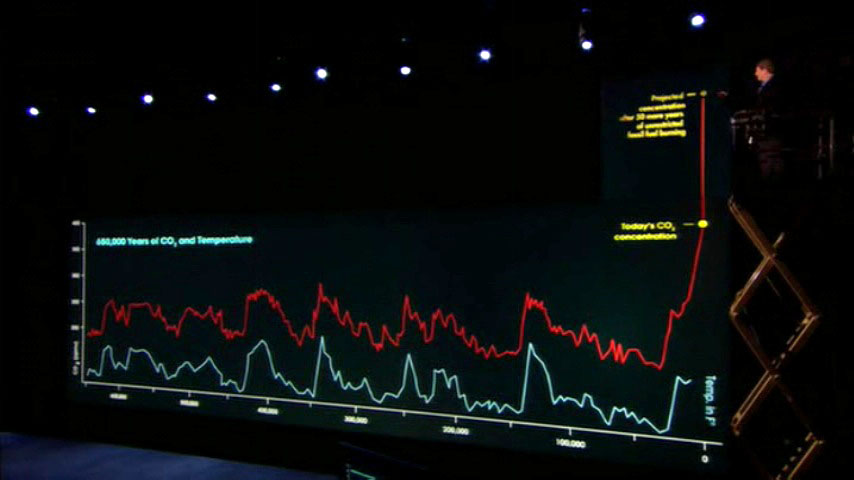
The housing bubble reminds me of An Inconvenient Truth
Basically, if housing prices get too high, people shouldn't be buying houses because renting will be cheaper. The linked chart shows the ratio of housing prices to rental prices, a measure of the imbalance in the residential market. The tail end we're on reminds me of the global carbon increase chart that Al Gore required a hydraulic lift to illustrate. This bubble hasn't begun to burst.
Do lobbyists muck up the American political system?
Factcheck.org looks at lobbying in the Constitutional context.
Monday, December 10, 2007
Bush is smart - he plays word games
President Bush may have been informed that Iran does not have an active nuclear weapons program, but that hasn't stopped him from insinuating one.
Friday, December 07, 2007
A police chief with respect for 1st Amendment rights
When the Republican National Convention comes to St. Paul, Minnesota, in 2008 it could recall any number of past conventions. What police and protesters look to avoid is a comparison to the disorder around the 1968 Chicago Democratic Convention or the stifling security around the 2004 Conventions in Boston and New York.
The top cop responsible for St. Paul's security for the 2008 Republican convention is taking steps to build relationships with protesters, to more evenly balance security and free speech.
The top cop responsible for St. Paul's security for the 2008 Republican convention is taking steps to build relationships with protesters, to more evenly balance security and free speech.
There will be no police officers infiltrating protest organizations, Bostrom promised. Police will be in uniform, not war-like tactical gear, he said. There will be no contract cops, similar to the Blackwater security forces. St. Paul police, not the Secret Service, will be in charge of policing outside the convention site at Xcel Energy Center.It's a great start. Let's hope the yahoos don't mess up this excellent attempt at providing a free speech zone inside and outside the convention center.
Why Calling Dick Cheney Darth Vader is Too Generous
1) Darth Vader served in the military
2) Darth Vader's contractors actually finished their job (i.e. the Death Star)
Nod to Paul Krugman for the hilarious, and honestly very sad, comparison.
2) Darth Vader's contractors actually finished their job (i.e. the Death Star)
Nod to Paul Krugman for the hilarious, and honestly very sad, comparison.
Thursday, December 06, 2007
Climate change policy: cap and trade flopped in Europe
The U.S. is getting much closer to regulating carbon emissions to combat global warming, but the most likely policy is a carbon cap and trade system. Problem is, Europe tried such a system starting three years ago and this interview discusses how that program has flopped.
This is why a cap-and-rebate may be a much better option.
Tip of the hat to Triple Pundit for the story.
This is why a cap-and-rebate may be a much better option.
Tip of the hat to Triple Pundit for the story.
Bureaucracy at work
When I was job hunting, I applied for jobs in the nonprofit and government sector. I was lucky to find a great job that I started in October 2006. So how is it possible that, over a year later, I'm still getting these emails?
Dear XXXXDoes it really take that long to hire someone in a state agency? Ugh.
Thank you for applying for the XXXXX Department of...Economic Development Planner Senior State position, 07DEED000233.
We have decided to select a candidate from within the Department.
Wednesday, December 05, 2007
The mortgage crisis: illustrated version
Trying to understand how a bunch of "subprime" loans caused a mortgage crisis? This animated mortgage crisis illustration might explain. Basically, banks sold mortgages as "securities" (think mutual funds) to other investors but dramatically underestimated the risk of widespread defaults (foreclosures).
In other words, when those crazy adjustable-rate mortgages started bankrupting people all over the country at once, the flow of cash dried up. And that meant that those securities (stocks) dropped precipitously in value. Oops.
In other words, when those crazy adjustable-rate mortgages started bankrupting people all over the country at once, the flow of cash dried up. And that meant that those securities (stocks) dropped precipitously in value. Oops.
Tuesday, December 04, 2007
No nukes in Iran
In case you were being whisked away on President Bush's (In)credibility Express (next stop: Iran), check this out. The report from the combined intelligence agencies of the United States - the Intelligence Estimate - says that the 2005 report was in error and that Iran does not have an active nuclear weapons program.
No nukes, no troops.
No nukes, no troops.
Monday, December 03, 2007
With higher gas prices, a hybrid pays off
You can make back the hybrid price premium in gasoline savings within a year, depending on your driving habits.
Monday, November 26, 2007

How that yellow line shows the first down
Courtesy of Shadoweyes, a nice explanation of how they do that nifty first-down line on television broadcasts of the NFL.
Sunday, November 25, 2007
Technology and the trash can
There's a reason your iPod doesn't last a dozen years. It's not just the workmanship...
Electronics are being discarded almost as fast as they’re being made. And the innovators are largely to blame for that. While the effective lifespan of a new computer should be, in a sane world, a decade or more, realistically you’ve got a dinosaur if it’s been sitting on your desk longer than a couple of years. And our tax laws encourage this.Read more on the role of technology and "planned obsolescence" in economic growth.Why?
Because the innovators know that they need you coming back every few years to keep those coffers overflowing. If you’re visiting the Apple Store only once in a decade, then there might not be an Apple Store at all.
When Star Wars jumped the shark
To sum up, it was when being a Jedi became something less than democratic:
The first time I saw Star Wars, I wanted to be a Jedi (I was six, and hadn’t yet tuned into the princess-impressing coolness that was Han Solo.) Sure, I wasn’t a Skywalker and The Force wasn’t naturally strong with me, but a short hyperspace jaunt to Alderaan and some personal time with a Jedi master and I could take my first steps into a larger world...
Check out the rest here
Monday, November 19, 2007
"There's shit in the meat"
If you haven't seen "Fast Food Nation" on video, I don't recommend it over the book by Eric Schlosser. But this op-ed manages to summarize nicely why industrial-sized agriculture isn't always compatible with health and environmental well-being.
First, if you've missed the news:
Maybe we should stop eating things that walk around in poop all day. Or at least get them out of the poop first. Just a thought.
First, if you've missed the news:
over 30 million pounds of ground beef in 18 separate recalls have been necessary this year aloneMany of the leading public officials are calling for irradiation of the nation's food supply (bombardment with gamma rays) to kill harmful bacteria:
We should require that our entire food supply be subjected to irradiation before consuming it. Once again, we see a solution posed that is designed to treat the effect while ignoring the cause. It is somewhat akin to the cigarette smoker who would rather wait to develop cancer and then undergo treatment for it rather than just quit smoking.See, the reason we have bacteria, on the shit, on the meat, is because of how we make meat:
Cattle are ruminants, and they have evolved to eat grasses and forbs. Feeding grain to cattle makes their digestive tracts abnormally acidic. Over time, the E. coli in their systems become acclimated to this environment, thereby rendering it more resistant to the acid shock of our digestive juices. However, few E. coli from grass-fed cattle will survive because they have not become acid-resistant. Consequently, when cattle are fed a diet of grass, our natural defenses are still capable of protecting us.How much difference does the process make?
A study by Swedish researchers in 2001 found that 100 percent of calves raised in pens had some level of E. coli contamination, while those raised in pasture showed no signs of contamination at all.Feedlot cattle stand around in dirt and fecal material. Grass-fed cattle stand on grass.
Maybe we should stop eating things that walk around in poop all day. Or at least get them out of the poop first. Just a thought.
Co-opting green
At the Los Angeles Auto Show this year, the Chevy Tahoe hybrid won the "green car of the year" award. The irony?
The Chevy Tahoe gets 20 miles to the gallon. Outside, several plug-in hybrid Toyota Priuses were featured: with capability to get over 100 miles per gallon.
Nice try, Tahoe.
The Chevy Tahoe gets 20 miles to the gallon. Outside, several plug-in hybrid Toyota Priuses were featured: with capability to get over 100 miles per gallon.
Nice try, Tahoe.
Thursday, November 15, 2007
Reagan was no bigot...
...but he sure knew how to campaign like one.
When he went on about the welfare queen driving her Cadillac, and kept repeating the story years after it had been debunked, some people thought he was engaging in race-baiting. But it was all just an innocent mistake.
When, in 1976, he talked about working people angry about the “strapping young buck” using food stamps to buy T-bone steaks at the grocery store, he didn’t mean to play into racial hostility. True, as The New York Times reported,
The ex-Governor has used the grocery-line illustration before, but in states like New Hampshire where there is scant black population, he has never used the expression “young buck,” which, to whites in the South, generally denotes a large black man.
But the appearance that Reagan was playing to Southern prejudice was just an innocent mistake.
Similarly, when Reagan declared in 1980 that the Voting Rights Act had been “humiliating to the South,” he didn’t mean to signal sympathy with segregationists. It was all an innocent mistake.
In 1982, when Reagan intervened on the side of Bob Jones University, which was on the verge of losing its tax-exempt status because of its ban on interracial dating, he had no idea that the issue was so racially charged. It was all an innocent mistake.
And the next year, when Reagan fired three members of the Civil Rights Commission, it wasn’t intended as a gesture of support to Southern whites. It was all an innocent mistake.
Poor Reagan. He just kept on making those innocent mistakes, again and again and again.
Wednesday, November 14, 2007
The Inanity of Electability
Political writers like a good story, a horserace, a poll, which is why election coverage in this country resembles sports more than it does democracy. One artifact of this tendency is the "electability" issue, the supposed obsession of voters with which of their party's candidates is most able to win the general election.
Electability represents one thing:
The ability of the media to set the terms of the debate during an election. Instead of picking the candidate who best fits their political beliefs or inspires them, political writers like to think that the average voter spends his time like the backroom party leaders of old, smoking cigars and strategizing who can win. And since that's a more interesting story to write, when election time comes that's all people can remember hearing/reading about when they go to the polls - who the media thought was most electable.
The beautiful irony is that John Kerry was anointed the "more electable" candidate by the press prior to the 2004 general election. And he lost, worse than Al Gore (another electable guy). Candidates fit the requirements the electorate sets for them, whether in terms of experience, honesty, values, or inspiration. But these days, it seems like the press would have us use only one criteria - electable.
Monday, November 12, 2007
U.S. Health Care: It's not the private part that makes us innovative
A tip of the hat to Paul Krugman for this piece that debunks the idea that universal health care will undermine the U.S. lead in medical innovation.
The single biggest source of medical research funding, not just in the United States but in the entire world, is the National Institutes of Health (NIH): Last year, it spent more than $28 billion on research, accounting for about one-third of the total dollars spent on medical research and development in this country (and half the money spent at universities)...There's your private sector health care innovation - it's in the marketing department.As books like Marcia Angell's The Truth About the Drug Companies and Merrill Goozner's The $800 Million Pill point out, a lot of the alleged innovation we get from private industry just isn't all that innovative. Rather than concentrating on developing true blockbusters, for the last decade or so the pharmaceutical industry has poured the lion's share of its efforts into a parade of "me-too" drugs--close replicas of existing treatments that offer little in the way of new therapeutic advantages but generate enormous profits because they are patented and because companies have become exceedingly good at promoting their sales directly to consumers. (emphasis mine)
The most well-known example of this is Nexium, which AstraZeneca introduced several years ago as the successor to Prilosec...AstraZeneca promoted Nexium heavily through advertising--you may remember the ads for the new "purple pill"--and, as a result, millions of patients went to their doctors asking for it. Trouble was, the evidence suggested that Nexium's results were not much better than Prilosec's--if, indeed, they were better at all. And, since Prilosec was going off patent, competition from generic-brand copies was about to make it a much cheaper alternative. (The fact that Prilosec's price was about to plummet, needless to say, is precisely why AstraZeneca was so eager to roll out a new, patented drug for which it could charge a great deal more money.)
Which presidential candidate cares the most about the environment?
Find out their positions on carbon caps, fuel efficiency standards, renewable electricity and new coal power from the League of Conservation Voters.
You'll note there's a large gap between the Democratic and Republican candidates, with the exception of Senator McCain.
You'll note there's a large gap between the Democratic and Republican candidates, with the exception of Senator McCain.
Tuesday, November 06, 2007
In short: objectivity kills truth
From Paul Krugman:
If a presidential candidate were to declare that the earth is flat, you would be sure to see a news analysis under the headline ‘’Shape of the Planet: Both Sides Have a Point.'’This tendency is particularly frustrating during national election campaigns, when I'd like to select candidates based on their honesty and policy.
Monday, November 05, 2007
Dark-sky initiative out to save stars, and energy
The International Dark Sky Association began from a desire to preserve the nighttime views of the sky, often obscured by urban light pollution (e.g. the Interstate gas station with enough sky-bound light to show the Apollo mission the way to the moon). Starting in Flagstaff, Arizona, where light pollution has encroached on the view from a nearby observatory, the dark sky aficionados are trying to convince other urban areas that light pollution doesn't just ruin beautiful star-scapes, it wastes energy.
This panel from their brochure highlights (pardon the pun) the difference:

This panel from their brochure highlights (pardon the pun) the difference:

Thursday, November 01, 2007
Blogging roundup
Once in a while I like to devote one post to several stories I've found interesting, but have been unable to find time to blog about.
1. When should rescue attempts be abandoned?
Mine collapses in the Rocky Mountain West two months ago led to the loss of several miners, and subsequently the death of several rescuers from an ensuing cave-in. Manned rescue attempts were stopped after the second collapse. Was that fair? What if the original miners were still trapped below earth and eventually died from starvation?
2. How "constant vigilance" for terrorists hands them a victory
3. Care about privacy or the 4th Amendment? Here's a nice 2-page analysis of what we need when Congress passes amendments to the Policing America Act - the legislation passed as a stop-gap in August to give Democrats more time to cave in to the Bush Administration's demands for unscrutinized ability to police Americans. One thought:
In May I noted how OSHA declined to regulate diacetyl despite several debilitating injuries to popcorn plant employees. In September, a man was diagnosed with "popcorn lung" after being a heavy consumer of microwave popcorn.
1. When should rescue attempts be abandoned?
Mine collapses in the Rocky Mountain West two months ago led to the loss of several miners, and subsequently the death of several rescuers from an ensuing cave-in. Manned rescue attempts were stopped after the second collapse. Was that fair? What if the original miners were still trapped below earth and eventually died from starvation?
2. How "constant vigilance" for terrorists hands them a victory
This story has been repeated endlessly, both in the United States and in other countries. Someone -- these are all real -- notices a funny smell, or some white powder, or two people passing an envelope, or a dark-skinned man leaving boxes at the curb, or a cell phone in an airplane seat. The police cordon off the area, make arrests and/or evacuate airplanes, and in the end the cause of the alarm is revealed as a pot of Thai chili sauce, or flour, or a utility bill, or an English professor recycling or a cell phone in an airplane seat.Read the story about the English professor - it's an embarrassment.
3. Care about privacy or the 4th Amendment? Here's a nice 2-page analysis of what we need when Congress passes amendments to the Policing America Act - the legislation passed as a stop-gap in August to give Democrats more time to cave in to the Bush Administration's demands for unscrutinized ability to police Americans. One thought:
- The legislation currently allows a "blanket warrant" to wiretap (or otherwise surveil) conversations of a foreign national with any American citizen. This is expressly prohibited by the 4th Amendment, which requires "probable cause." I shudder to think that some Founders thought we didn't need a bill of rights and that the Constitution implied that only very limited powers accrued to the national government.
In May I noted how OSHA declined to regulate diacetyl despite several debilitating injuries to popcorn plant employees. In September, a man was diagnosed with "popcorn lung" after being a heavy consumer of microwave popcorn.
Blogging Sporadically
Life has recently held a lot of excitement, which is why the blogging volume is down. A sample:
- A basement remodel (DIY) has consumed most weekday evenings and weekends. We have a framed bathroom, furnace room, and laundry room (less two studs). The contractor will be back next week - hopefully - to finish off the plumbing and maybe get our electrical upgraded.
- Cats obtained fleas, adding biweekly vacuuming, weekly cats baths, and twice daily flea combing. I will be a master of lice when we have kids.
- The former project has left laundry out of commission, moving our weekly (and massive) laundry detail to my parents' house. Thank god for nearby relatives. K, you are a hero!
- Finished a policy brief on climate change for work, will be speaking at two conferences in the next week, and am writing a 50-page report on rural energy and economic development in my spare time. Did get another nice raise this week. Muchas gracias!
- Am trying to be more than an observing board member on a nonprofit board I've served on. It means a lot more volunteering to help with events and planning, but at least I feel like I'm earning my seat.
President Bush: a French terrorist?
Nothing like a little historical perspective on our "War on Terror" to make you think twice about who the terrorists are. A historian compares today's war with the French Revolution, defined by the Jacobins.
The stakes could not be higher, and on these matters there could be no nuance or hesitation. One was either for the Revolution or for tyranny.Read on for more on how failing to understand history dooms us to repeat it.
Monday, October 29, 2007
This isn't "performance pay"
One of my favorite features of Paul Krugman's blog is his willingness to look back. In this case, he examines the ridiculous pay packages of CEOs from the perspective of the early 1990s:
Jensen and Murphy, 1990:
On average, corporate America pays its most important leaders like bureaucrats. Is it any wonder then that so many CEOs act like bureaucrats?
So we stopped paying them like bureaucrats, and got this:
The Price of Any Departure Will Be at Least $159 Million
By ERIC DASH
Merrill Lynch’s directors may be weighing E. Stanley O’Neal’s future, but one thing is already guaranteed: a payday of at least $159 million if he steps down.
Friday, October 26, 2007
Thursday, October 25, 2007
Rich folks are Republicans
Apparently there's been a misconception floating around about wealth and political party preference. Well, actually it's more like a bold-faced lie by many conservative commentators.
Paul Krugman has the data: rich folks vote Republican and poor folks vote Democratic. This income-related pattern has also become stronger in the past 40 years.
Paul Krugman has the data: rich folks vote Republican and poor folks vote Democratic. This income-related pattern has also become stronger in the past 40 years.
Tuesday, October 23, 2007
Unleaded gasoline lowered violent crime by 56%
According to a recently released study, examining the effects of removing lead from gasoline, unleaded gas substantially reduced lead poisoning in children. Because lead poisoning is linked to more aggressive behavior is linked to violent crime, the study finds a substantial reduction in violent crime associated with the removal of lead from gasoline.
This is in addition to the substantial reduction in violent crime from the legalization of abortion.
It's crazy how things are linked together...
This is in addition to the substantial reduction in violent crime from the legalization of abortion.
It's crazy how things are linked together...
Global warming: think thirsty
One of the excellent, in-depth stories from the NY Times examines an often overlooked consequence of global warming and population growth - decreasing water availability.
When Binney and I met at Dillon Reservoir, he brought graphs of Colorado River flows that go back nearly a thousand years. “There was this one in the 1150s,” he said, tracing a jagged line downward with his finger. “They think that’s when the Anasazi Indians were forced out. We see drought cycles here that can go up to 60 years of below-average precipitation.”For the 30 million people that depend on the Colorado River, that's no laughing matter. The story goes on to discuss how water use in the United States is decreasing, but not nearly fast enough to prepare for inevitable battles between states and regions for the precious resource.
Friday, October 19, 2007
That's the point
In response to the climate change bill introduced in the U.S. Senate, proposing greenhouse gas reductions of 65% from 2005 levels by 2050, the CEO of the American Chemistry Council had this to say:
The bill would "turn energy markets upside down, causing massive reductions in coal usage and enormous increases in natural gas and renewable fuels usage."Yes.
Attorney General candidate Mukasey: thumbs down
Mukasey's confirmation hearing before the Senate Judiciary Committee went off the deep end yesterday:
But the whole reason for forming the United States, independent of Britain, was to gain relief from arbitrary exercise of power - power exercised outside the definition of law. Read the grievances in the Declaration of Independence - it's almost entirely a list of King George's exercise of arbitrary power.
The next attorney general needs to have enough respect for law to believe the President is beneath it. That's clearly not Mukasey.
He suggested that both the administration’s program of eavesdropping without warrants and its use of “enhanced” interrogation techniques for terrorism suspects, including waterboarding, might be acceptable under the Constitution even if they went beyond what the law technically allowed.Technically? Let's look at the Constitution, Article 6:
This Constitution, and the Laws of the United States which shall be made in Pursuance thereof; and all Treaties made, or which shall be made, under the Authority of the United States, shall be the supreme Law of the LandThe article in question may or may not apply to exactly the kind of "extralegal" behavior of President Bush, but its ambivalence doesn't exonerate him (its focus was on superseding state laws and constitutions).
But the whole reason for forming the United States, independent of Britain, was to gain relief from arbitrary exercise of power - power exercised outside the definition of law. Read the grievances in the Declaration of Independence - it's almost entirely a list of King George's exercise of arbitrary power.
The next attorney general needs to have enough respect for law to believe the President is beneath it. That's clearly not Mukasey.
Thursday, October 18, 2007
Are Congressional Republicans that ashamed of the Constitution?
In response to legislation curtailing the warrantless wiretapping and other illegal surveillance techniques used by President Bush's administration, many Congressional Republicans have expressed dismay:
The measure "extends our Constitution beyond American soil to our enemies who want to cut the heads off Americans," said Rep. Louie Gohmert (R-Tex.).I thought that Iraq represented an opportunity to spread democracy and American political values beyond our borders. So why would we be ashamed to extend our Constitution - the enumeration of our values - beyond American soil?
For the driver of bus route 3B this morning:

When I'm standing under the blue sign, it means I'd like to ride the bus.
Tuesday, October 16, 2007
The Best Way to Reduce Abortion? Legalize It.
An interesting story from the Minnesota Monitor looks at the data on abortions from the developed and developing world and finds that countries with more open and legal abortions have fewer of them.
Monday, October 15, 2007
Reagonomics works!
From the Onion:
And for those who care to analyze faux news, if Mr Kellener had invested that $10 from 1981 in an index fund with an average annual return of 10%, he'd currently have $119.
Twenty-six years after Ronald Reagan first set his controversial fiscal policies into motion, the deceased president's massive tax cuts for the ultrarich at last trickled all the way down to deliver their bounty, in the form of a $10 bonus, to Hazelwood, MO car-wash attendant Frank Kellener.The best part is the faux analysis:
"Had Mr. Kellener received that money in 1981, like the Democrats wanted, it would only be worth $4.24 today because of inflation," Treasury Secretary Henry M. Paulson, Jr. said during an official announcement of the economic policy's success at a press conference Monday.The sad part is that while the Onion's numerical mysticism is tongue-in-cheek, this kind of game-playing often isn't. The Defense Department recently announced that sectarian violence in Iraq was down because people shot in the front of the head were considered "criminal deaths" whereas back-of-the-head hits were called "sectarian."
And for those who care to analyze faux news, if Mr Kellener had invested that $10 from 1981 in an index fund with an average annual return of 10%, he'd currently have $119.
Wednesday, October 10, 2007
Fish dinner with a side of history
We dined with my parents a couple weeks ago and had fish, a not particularly regular occurrence. Usually if we do, it's salmon, but this was breaded fish so Dad brought out the tartar sauce to complement the meal.
Exactly.
An examination of the bottle found this on the label:
The fish was delicious. Without sauce.
Aside: I used to love tartar sauce, but I think it lost its appeal when I realized it was made of mayo and relish, two things I used to despise. Mayo is cool now. Relish: no.At any rate, when Dad set the tartar sauce bottle on the table, there was something...familiar about it. The brand? The label? And how could it look familiar, anyway, we haven't had tartar sauce in years!
Exactly.
An examination of the bottle found this on the label:
BEST IF SOLD BY NOV 1997Of course it was familiar. I still lived at home then and this was the same tartar sauce. 40 million Americans have been born since this tartar sauce was sold.
The fish was delicious. Without sauce.
Friday, October 05, 2007
Humpdty Dumpty
The Humpdty-Dumpty administration
“This government does not torture people,” the president said
‘When I use a word,’ Humpty Dumpty said, in a rather scornful tone,’ it means just what I choose it to mean, neither more nor less.’
‘The question is,’ said Alice, ‘whether you can make words mean so many different things.’
‘The question is,’ said Humpty Dumpty, ‘which is to be master - that’s all.’
Thursday, October 04, 2007
U.S. Foreign Policy: Not Really About Democracy
This analysis of the situation in Burma (by one of my favorite political writers, Eric Black) notes that both humanitarian and democratic causes would be well-served by U.S. intervention. Additionally, many politicians and Americans believe that (and say that) American overseas intervention is on the principle of spreading democracy abroad:
Not to mention, the political grandstanding about "democracy" (after the uncovering of lies about WMD) have eroded people's belief in the U.S. as a benevolent democracy-spreader.
The history of U.S. wars and covert interventions, and their relationship to democratization, plus the long-standing close alliances between Washington and some of the world's most repressive regimes do not lend much credibility to this nostrum.As much as the author is critical of current U.S. foreign policy priorities, he's not necessarily in favor of a military intervention in Burma.
...Pres. Bush spoke of the universal longing for democracy, of the benefits to the U.S. of the spread of democracy in areas of terrorist operations, and of the (historically fairly silly) claim that democracies don't start wars. (In the post-World War II era, the United States has started far more wars than any other nation.)
The history of such U.S. invasions, proxy wars (and covert overthrows, don't forget those) includes too many instances of the United States overthrowing (or helping overthrow) democratic governments (in Iran in 1953, Guatemala in 1954, Congo in 1960, and Chile in 1973, to name four of the best documented cases), then establishing long, close friendships with the dictators that replaced them.Many of these cases came about during the Cold War, when U.S. intervention was defended on the basis of anti-communism. The parallels to Iraq (under the guise of anti-terrorism) are a little frightening.
Not to mention, the political grandstanding about "democracy" (after the uncovering of lies about WMD) have eroded people's belief in the U.S. as a benevolent democracy-spreader.
When the Pew Global Attitudes Project conducted 45,239 interviews in 47 nations this year, they asked respondents to choose between these statements:
In 46 of the 47 nations the second answer was the majority or plurality winner...In 38 of the nations, fewer than 30 percent believes the U.S. favors democracy for all. In Britain, only nine percent, in Germany, four; in France, three.
- The United States promotes democracy wherever it can or
- The United States promotes democracy mostly where it serves its interests.
Not even Americans drink the Kool-Aid.
Thirty percent of U.S. respondents agreed with the statement that the U.S. promotes democracy for everyone and for democracy's own sake; 63 percent said no, only when it serves the U.S. interests.Sad.
Extend your wireless router range for $1
Courtesy of freeantennas.com (which is currently experiencing heavy traffic) and Lifehacker, this wireless range extender (a.k.a. cardstock and aluminum foil) can get you much better wireless range from your home router.
Here's a video tutorial:
Assembly Instructions:

Here's a video tutorial:
Assembly Instructions:
- Download Template (the image below)
- Open in MS Paint or other simple image editor and resize as desired (As is it will increase signal by 9dB. Twice the size will get you 12dB). Ensure that you keep the square on the diagram square.
- Print image on business card stock or acetate (document protector).
- Cut it out and open the six slots with scissors or an X-Acto knife.
- Glue tin foil to the back side of the reflector surface
- Assemble by placing the six tabs in the six slots.

Tuesday, October 02, 2007
Great leadership from the GOP
The moderate Republicans in Congress claim to care about the American people's dissatisfaction with the Iraq conflict, but what do they do?
Sen. George Voinovich, R-Ohio, along with Minnesota's Norm Coleman, North Carolina's Liddy Dole and Tennessee's Lamar Alexander, drafted a bold new plan that would move our troops into a new support role in Iraq, while demanding that we begin a drawdown of American troops.The article looks no further than the re-election battles these bold senators face in 2008 for his rationale.In 2009.
There's your "tax and spend," tightwad
Paul Krugman blogs that it only took conservatives 30 years to realize that Democrats are more fiscally responsible than Republicans.
Duh.

Duh.

Sunday, September 30, 2007
Comparing Vietnam and Iraq
I went to an interesting forum tonight on the Vietnam War era of the Democratic Party. We had two speakers who addressed the parallels to today's conflict in Iraq (they expressly avoided the term "war") and the political issues it generated - namely, the internal conflict between anti-war candidate Eugene McCarthy and Hubert Humphrey.
The event was notable for its conversation after the speakers addressed the group, including a number of these thoughts:
The event was notable for its conversation after the speakers addressed the group, including a number of these thoughts:
- The draft: Would we be in Iraq if we didn't have the volunteer army, or so many mercenaries?
- The opposition: is our familiarity with visual violence the difference between campus activism and apathy? I mean, how many Bruce Willis movies does it take to make me unimpressed by bloody videos from Iraq?
- Peace: the opposition to Iraq is "anti-war." We changed the War Department to the Defense Department, but we still fight "wars." Are any of us for peace anymore?
- Victory is defeat: it felt like the "war" could change when Democrats took charge of Congress in 2006. Why hasn't it? And why are we debating this horseshit instead?
Thursday, September 27, 2007
A no speech zone is opened, but for how long?
Earlier today it was reported that Verizon had prohibited NARAL Pro-Choice America from using its text messaging service to send updates to interested subscribers. Although the company reversed course later in the day, the troubling precedent, and legal foundation, remain:
But legal experts said private companies like Verizon probably have the legal right to decide which messages to carry. The laws that forbid common carriers from interfering with voice transmissions on ordinary phone lines do not apply to text messages.Historically, government has stepped in to require communications companies to relay any message, especially when there were near-monopolies on the service.
Given the way that mobile phone companies lock users in to long-term contracts, I think there's a good argument for market failure when speech is suppressed. Especially when your Verizon alternatives are shit.Professor Wu pointed to a historical analogy. In the 19th century, he said, Western Union, the telegraph company, engaged in discrimination, based on the political views of people who sought to send telegrams. “One of the eventual reactions was the common carrier rule,” Professor Wu said, which required telegraph and then phone companies to accept communications from all speakers on all topics.
Some scholars said such a rule was not needed for text messages because market competition was sufficient to ensure robust political debate.
Subscribe to:
Posts (Atom)