Monday, January 29, 2007
Nutritionism: going micro until it's no longer food
An excellent essay describing how Western science spends so much time deconstructing food that we no longer have as much to eat - and yet we're eating ourselves into poor heatlh.

Buffalo buffalo
Spending too much time on Wikipedia (and Slashdot) will help you discover grammatically correct sentences.
Incidentally, the scientific name for buffalo is Bison Bison, though I doubt that is a sentence.
Incidentally, the scientific name for buffalo is Bison Bison, though I doubt that is a sentence.
Iraq pundits: where they are now
Radar Magazine online has an interesting look at eight political pundits, four who favored the Iraq War and four who opposed it, and where they are now. The conclusion? That there's not much of a meritocracy in the pundit world - in fact, being wrong can make you very rich.
Friday, January 26, 2007
"Put your money where your house is"
I'm just finishing a great book called Big Box Swindle: The True Cost of Mega-Retailers and the Fight for America's Independent Businesses and I came across this quote near the end, though it could really be the rallying cry for the entire independent business movement. Author Stacy Mitchell rallies an inordinate amount of data to her issue, finding that local business beats chain stores in any number ways:
Anyway, all these points kind of came together for me yesterday into that one phrase. If you are a homeowner and want to see your community thrive, then "put your money where your house is" and shop local.
- A substantially higher portion of dollars spent at an independent business stay in the local community.
- Independent business owners are middle class with a connection to the community. They pay their employees better, customize their store the area's needs, and give double what a chain store gives to charity as a percent of their revenue.
- Independent businesses frequently match or beat chain store prices, despite constant advertising suggesting that "always low prices" or "get more, pay less" only happens at a big box discount store.
- Independent businesses tend to add to a community's tax base, whereas big box stores tend to get tax breaks and add substantial strain on public infrastructure such as water, sewer, roads, and the police (prosecuting all shoplifters).
Anyway, all these points kind of came together for me yesterday into that one phrase. If you are a homeowner and want to see your community thrive, then "put your money where your house is" and shop local.
Wednesday, January 24, 2007
What would you buy with $1.2 trillion?
You could buy a few of these things:
Or, you could start and prosecute a war in Iraq.
To date, direct spending for the Iraq War has already reached $700 billion, with another $250 billion in anticipated costs to treat wounded and returned veterans, $100 billion to get the armed forces back to prewar fighting readiness, and other incidentals. All told, that's $1.2 trillion gone.
The author notes that it's not that $1.2 trillion is wasted, not if all goes well in Iraq. But it's to note that we need to evaluate whether the $1.2 trillion could have been better spent: on national security, fighting Al Qaeda in Afghanistan, or beefing up airport security. Any one of which would have had a higher success rate than this failed war.
- A doubling of cancer research funding
- Treatment for heart disease and diabetes for every American needing it
- A global immunization campaign
Or, you could start and prosecute a war in Iraq.
To date, direct spending for the Iraq War has already reached $700 billion, with another $250 billion in anticipated costs to treat wounded and returned veterans, $100 billion to get the armed forces back to prewar fighting readiness, and other incidentals. All told, that's $1.2 trillion gone.
The author notes that it's not that $1.2 trillion is wasted, not if all goes well in Iraq. But it's to note that we need to evaluate whether the $1.2 trillion could have been better spent: on national security, fighting Al Qaeda in Afghanistan, or beefing up airport security. Any one of which would have had a higher success rate than this failed war.
Tuesday, January 23, 2007
State of the Union
In case you were too busy to catch the State of the Union, here's a quick analysis from your favorite progressive news source (for those that don't read Daily Kos, anyway).
Bush started with the domestic agenda, which was probably a good idea given that the foreign stuff isn't looking so good. So what's on his plate?
The health care stuff is just hand waving. Changing the tax code is a pittance compared to the efforts being made in states like Massachusetts or even Minnesota to guarantee universal health coverage.
The climate change proposals are a mixed bag. The renewable fuel mandate is a bold move, along with a commitment to reduce gasoline used by 20%. However, the Johnny-come-lately provisions are unlikely to even level off U.S. carbon emissions, which scientists have said may need to drop by as much as 80% to halt irreversible climate change. So, it's a good jumping off point for the Democratic Congress.
The foreign agenda involved three major items:
Bush started with the domestic agenda, which was probably a good idea given that the foreign stuff isn't looking so good. So what's on his plate?
- Renewing No Child Left Behind
- Changing the tax code to make it easier for people to privately acquire health care
- Getting on the energy security/climate change bandwagon by...
- Quintupling the renewable fuels mandate to 35 billion gallons per year by 2017 (the equivalent of 15% of gasoline usage)
- Committing the U.S. to reduce gasoline usage by 20% by 2017
- Increasing CAFE fuel economy standards (starting in 2010) by 4% (or 1 mpg) per year
- Doubling the strategic petroleum reserve
The health care stuff is just hand waving. Changing the tax code is a pittance compared to the efforts being made in states like Massachusetts or even Minnesota to guarantee universal health coverage.
The climate change proposals are a mixed bag. The renewable fuel mandate is a bold move, along with a commitment to reduce gasoline used by 20%. However, the Johnny-come-lately provisions are unlikely to even level off U.S. carbon emissions, which scientists have said may need to drop by as much as 80% to halt irreversible climate change. So, it's a good jumping off point for the Democratic Congress.
The foreign agenda involved three major items:
- Emphasizing the importance of the troop surge
- Covering the rest of the war on terror that we've put on hold (Afghanistan, Iran, North Korea, etc)
- Discussing a few items of foreign aid, such as combating AIDS (something he talked about ages ago) and malaria in Africa.
- I lied - the fourth item was a proposed permanent increase in the size of the army and marines.
Stealth sugar
Following up on my earlier post about China's rapidly rising caloric intake, I wanted to share a little surprise about sugar.
I love sugar. Skittles, for example, are among the tastiest things known to humankind. And I like sweet things. But like a good little FDA automaton, I also like a balanced diet and exercise. So when I get my sugar, I prefer it to be in pure form (Skittles) as opposed to hiding in foods I think are good for me. Like yogurt, "a great low fat snack."
It just so happens that when it comes to sugar,


Hmm, back to the drawing board.
I love sugar. Skittles, for example, are among the tastiest things known to humankind. And I like sweet things. But like a good little FDA automaton, I also like a balanced diet and exercise. So when I get my sugar, I prefer it to be in pure form (Skittles) as opposed to hiding in foods I think are good for me. Like yogurt, "a great low fat snack."
It just so happens that when it comes to sugar,


Hmm, back to the drawing board.
How to be an asshole
I recently wrote a short analysis piece for work, which I then sent around to many of the folks who I'd spoken to in writing it. One such fellow had been the public relations person at a firm where I spoke to several employees. He'd been highly suspicious of my motives and clearly had no interest in helping me get the right answers, judging by his prior demeanor and his response to my request for comments:
Thank you. It appears your key points are wrong and the sources used/identified are uninformed.
P.S. I'm a dick
(postscript added for emphasis)
Saving the globe, one behavioral change at a time
Instead of always looking for the next technological fix for our ecological ills, this article explores how some minor behavior modification (such as recycling, dressing for the weather) can save a lot of energy for not a lot of money. The author also owns the Clean Break blog, an excellent source of environmental punditry.
Monday, January 22, 2007
Eat more, get big
I read a lot about agriculture for my job, since renewable energy production often involves conversion of biomass to fuel or electricity. One agricultural economist has become required reading for me, because he talks a lot about the price pressures things like corn (because of ethanol production). I just read a column he wrote in 2003, and this non-agriculture fact jumped out:
In 1976 China had a population of 948.6 million people and the per capita daily calorie consumption was 2,051. By 2000, China's population had grown to 1.282 billion people and the per capita calorie consumption had risen to 3,029. (emphasis added)Whoa! It's not surprising that the obesity rate has doubled in the past 10 years. What's even more amazing is that while Americans get over 600 calories a day in sweeteners (read: sugar or HFCS), the Chinese only get about 65 calories from sugar. While calories are calories, the Chinese situation can only get worse as they adopt a more American diet with more meat and sugar.
AskPablo: my personal energy efficiency checker
This guy is great. He has an engineering degree and could probably spend weekends watching Indianapolis pull out a victory over New England. Instead, he answers the age-old question: is it more energy-efficient to wash dishes by hand or via dishwasher?
With the help of his handy third-grade assistant, Pablo discovers that a dishwasher causes about 4 times the energy use (and carbon emissions) as hand washing. So ditch the dishwasher and pull on those sexy yellow gloves!
(Note: Pablo did not factor in the other cost of hand washing, however - a good moisturizer to keep your hands silky soft after the brutal bite of dish soap :-)
With the help of his handy third-grade assistant, Pablo discovers that a dishwasher causes about 4 times the energy use (and carbon emissions) as hand washing. So ditch the dishwasher and pull on those sexy yellow gloves!
(Note: Pablo did not factor in the other cost of hand washing, however - a good moisturizer to keep your hands silky soft after the brutal bite of dish soap :-)
Thursday, January 18, 2007
Legislation proposes first cap on US carbon emissions
The Energy Blog has the scoop on the first legislation that may institute a carbon emissions cap for the United States. The cap doesn't take effect for several years, nor does it decline particularly quick, but it would be an enormous first step toward combating global warming to even admit we have a problem, which we do in spades...

Details of the bill:
Even more frustrating, the legislation ignores research by the Congressional Budget Office suggesting that a carbon tax would be much more efficient at reducing carbon emissions (not to mention it could provide a substantial sum of money with which to help reduce emissions). But taxes mean paying, something we're not used to doing under this administration.
And yet, for all its flaws, it's better than doing nothing.


Details of the bill:
- Would cap carbon emissions in the U.S. at 2004 levels starting in 2012.
- The cap would decline slowly to 2/3 of 2004 emissions by 2050.
Even more frustrating, the legislation ignores research by the Congressional Budget Office suggesting that a carbon tax would be much more efficient at reducing carbon emissions (not to mention it could provide a substantial sum of money with which to help reduce emissions). But taxes mean paying, something we're not used to doing under this administration.
And yet, for all its flaws, it's better than doing nothing.

Wednesday, January 17, 2007
Stick with mom, not pop
Can Americans really find yet another way to be less healthy?
A new report shows that more and more Americans are flaunting Mom's advice and having pop with breakfast. Here's the numbers on pop drinkers:
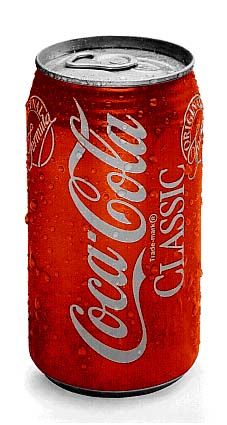
The sad part is that breakfast pop drinkers are probably part of the population drinking multiplecans Big Gulps each day, increasing their risk of broken bones, osteoporosis and other bone diseases. Speaking of Big Gulps, here's a nice illustration of why pop consumption has doubled since 1973:

A new report shows that more and more Americans are flaunting Mom's advice and having pop with breakfast. Here's the numbers on pop drinkers:
- 1 in 7 people who eat breakfast outside the home
- 1 in 42 people who eat breakfast at home
The sad part is that breakfast pop drinkers are probably part of the population drinking multiple

Stranger Than Fiction
Not only do I rarely make it to a movie in theaters, but I also rarely feel motivated to review the movie I see. Movies are movies, with a few exceptions such as Star Wars, Lord of the Rings, and Office Space. This weekend I saw another film that might make the exceptions list - and quite unexpectedly.
When a movie has Will Ferrell in it, I generally expect that I will find it amusing, but that the humor will not be as amusing to my movie-viewing partner (K, a.k.a. Wife). Stranger Than Fiction showed some promise, though, with Emma Thompson and Dustin Hoffman providing some color. We left for the theater on Saturday with some hope of entertainment.
It was great. The movie was clever, Will Ferrell played his part perfectly with just enough of his trademark outer-inner monologue. Dustin Hoffman and Emma Thompson were hilarious, each perfectly capturing the essence of their roles as university professor and writer's-blocked author. The story of a boring IRS auditor suddenly narrated into a novel was a neat idea and well-executed. I laughed out loud at least a dozen times and left feeling like I had easily gotten my money's worth (which would have been true even if I'd paid more than $3.
Anyway, there's not a movie I saw in all of 2006 that I can recommend more than Stranger Than Fiction
When a movie has Will Ferrell in it, I generally expect that I will find it amusing, but that the humor will not be as amusing to my movie-viewing partner (K, a.k.a. Wife). Stranger Than Fiction showed some promise, though, with Emma Thompson and Dustin Hoffman providing some color. We left for the theater on Saturday with some hope of entertainment.
It was great. The movie was clever, Will Ferrell played his part perfectly with just enough of his trademark outer-inner monologue. Dustin Hoffman and Emma Thompson were hilarious, each perfectly capturing the essence of their roles as university professor and writer's-blocked author. The story of a boring IRS auditor suddenly narrated into a novel was a neat idea and well-executed. I laughed out loud at least a dozen times and left feeling like I had easily gotten my money's worth (which would have been true even if I'd paid more than $3.
Anyway, there's not a movie I saw in all of 2006 that I can recommend more than Stranger Than Fiction
Friday, January 12, 2007
Lean back for your lower back
How many times have we heard that lower back pain is related to poor posture? Well, entre the new research from Scotland, where scientists have found that slouching may actually put less stress on your back. So relax, slouch down, and enjoy your day!
Playing through injuries not just for the macho
The conventional wisdom is that muscle and joint sprains need to be rested to heal, but this may be changing as additional research uncovers the benefits of exercise in healing hurt muscles. In other words: no more excuses; get back to the gym!
1/4 in to the first 100 hours
Check out the progress the new Democratic majority is making on their First 100 Hours proposals.
Thursday, January 11, 2007
Bush's new plan
In case you missed Bush's speech on the "new" Iraq strategy, you can find the transcript here. The big question left unanswered is whether 20,000 troops can make up for coming into Iraq with some 200,000 fewer troops than General Shinseki and others felt would be necessary to have adequate security. Bush notes most of these troops will go to Baghdad, to help secure the city. But what about the destabilized areas in the rest of the country?
The American Enterprise Institute, a libertarian think tank, just released a report that said that U.S. troops need to increase by 30,000 per year for the next two years to safely secure the country.
Ironically, the smaller surge proposed by President Bush could still put a strain on the army. To have 20,000 more troops in Iraq, the Army will either have to extend deployments or return troops before their leave is up.
The surge also goes against the advice of the Joint Chiefs, who feel that any surge in troops should be large and long-lasting, to guarantee an impact.
Conclusion? The surge was the most political palatable option for staying the course when so many Americans want to bring the troops home. And yet, it may be one of the dumbest ideas because it will put more troops in the line of fire without necessarily securing the country. Steve Sack (once again) may have said it best:

The American Enterprise Institute, a libertarian think tank, just released a report that said that U.S. troops need to increase by 30,000 per year for the next two years to safely secure the country.
Ironically, the smaller surge proposed by President Bush could still put a strain on the army. To have 20,000 more troops in Iraq, the Army will either have to extend deployments or return troops before their leave is up.
The surge also goes against the advice of the Joint Chiefs, who feel that any surge in troops should be large and long-lasting, to guarantee an impact.
Conclusion? The surge was the most political palatable option for staying the course when so many Americans want to bring the troops home. And yet, it may be one of the dumbest ideas because it will put more troops in the line of fire without necessarily securing the country. Steve Sack (once again) may have said it best:

Wednesday, January 10, 2007
Prepare your mind for President Bush
Star Tribune political writer Eric Black poses a number of questions/issues to consider when watching President Bush give his speech on the proposed "surge" in American troops.

- What can a surge accomplish that the current 132,000 troops can't?
- Is there a timeline for getting out?
- Congressional Democrats - the majority party - have said a troop surge is a mistake. Will Bush do anything to convince or shame them into accepting his proposal?
- The Mahdi Army, causing much of the violence, is led by Muqtada al-Sadr, who also helped place Al-Maliki in the Iraqi premier's post. How will that complicate calming the city's violence?
- Will Bush redefine victory? More and more analysts seem to be saying that we can't win. But will we just lower our sights a bit?
- What benchmarks will Bush set for success? A fully democratic and peaceful Iraq? A calmer Baghdad? Five fewer attacks per month?
- How will we pay for those 20,000 troops and their equipment?
- How will we account for the billions already spent (and any more proposed) for reconstruction?
- How will we pay for the rapidly increasing cost of caring for the wounded, many of whom have lost limbs or suffered significant permanent damage requiring lifelong care?

Tuesday, January 09, 2007
When capitalism meets electricity
For many years, so-called free marketers have insisted that the key to driving costs down, creating competition, and generally improving efficiency in the electric market means deregulation of energy companies. Of course, the Enron debacle and the 2000-01 California energy crisis have provided a sharp education that deregulation is not the best way about bringing free markets to electricity consumption.
Instead, it's time to try smart meters on a large scale. By allowing consumers to see the exact price they are paying for electricity at any given time, smart meters allow customers to tailor their electricity usage to off-peak hours, when utilities generally have excess capacity. The difference between peak and off-peak rates is 10 cents per kilowatt-hour for one Colorado utility, but can be as much as 40 cents per kwh (the average retail rate for electricity is around 11 cents/kwh).
In other words, consumers can choose to do laundry, wash dishes, or charge portable electronics at night, when rates are very low, and minimize their use during the day. Not only do households save money, but utilities can more effectively balance their load, reducing the need for new power plants. That's a win-win.
Instead, it's time to try smart meters on a large scale. By allowing consumers to see the exact price they are paying for electricity at any given time, smart meters allow customers to tailor their electricity usage to off-peak hours, when utilities generally have excess capacity. The difference between peak and off-peak rates is 10 cents per kilowatt-hour for one Colorado utility, but can be as much as 40 cents per kwh (the average retail rate for electricity is around 11 cents/kwh).
In other words, consumers can choose to do laundry, wash dishes, or charge portable electronics at night, when rates are very low, and minimize their use during the day. Not only do households save money, but utilities can more effectively balance their load, reducing the need for new power plants. That's a win-win.
Subscribe to:
Posts (Atom)